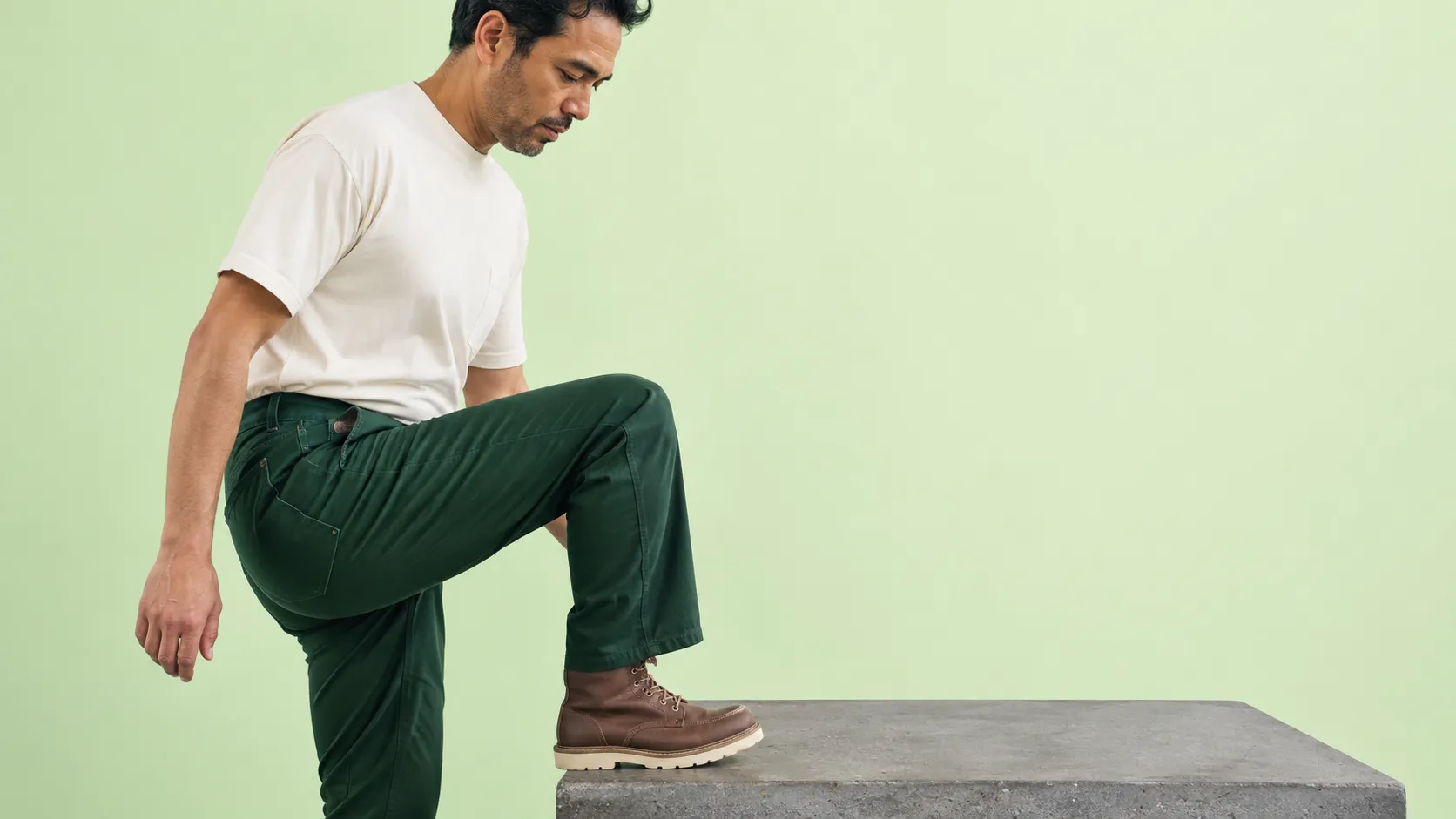
Managing knee and hip strain from repetitive leg work

Dr Nicola Tik
Some jobs keep your legs going all day, climbing steps over and over, working a pedal, squatting up and down, pushing off the same leg again and again. Each movement is small, but repeated hundreds or thousands of times it adds up, and the knees and hips are often what feel it. It is the sheer repetition, rather than any one heavy effort, that tires them. Building in recovery and easing how hard each movement is takes a lot of that strain away.
Your legs work as a unit, and a repeated movement usually shares itself between the knee and the hip. The knee handles the bending and straightening, while the hip drives the movement and steadies you. Repeat the action all day and both can tire, sometimes the knee aching at the front, sometimes the hip feeling it deeper. Because they work together, easing the movement tends to help them both at once rather than just one.
The key change is not letting the same leg movement run non-stop for hours. Short, regular pauses, even a few moments to stand evenly, walk a few steps, or take the load off the working leg, give the joints a chance to recover. Tying those breaks to the task, say between cycles or loads, makes them easy to keep up. Little and often does far more for the knees and hips than pushing on until they are sore and stopping only at the end.
Favouring one leg, always stepping up or pushing off the same side, loads that knee and hip much harder than the other. Where you can, leading with alternate legs, or spreading the effort evenly, stops one side taking everything. Standing with your weight balanced across both feet, rather than parked on one hip, gives the busy side a rest. Sharing the movement between both legs keeps either side from becoming the one that always aches.
How the task is arranged changes how hard each movement is. Cutting down unnecessary steps, deep squats or long reaches with the legs means fewer demanding repetitions over the day. A footstool, a raised surface, or a better layout can save a lot of bending and climbing. Where you have to squat or kneel repeatedly, going only as deep as you need, and using something to lean or rest on, eases the knees and hips. Small changes remove a surprising amount of repeated strain.
If your knees or hips ache after a day on your legs, gentle movement usually helps them settle more than sitting straight down. A gentle walk, some easy knee bends and hip circles, or a little warmth often take the edge off. Keeping moving through the evening tends to help more than seizing up. What works varies from person to person, so it is worth seeing what settles yours.
If you would like to try a guided lower-body stretch, VIDA has a short video you can follow at your own pace.
Your VIDA pain check-in is a good way to notice whether the breaks and changes are helping over time.