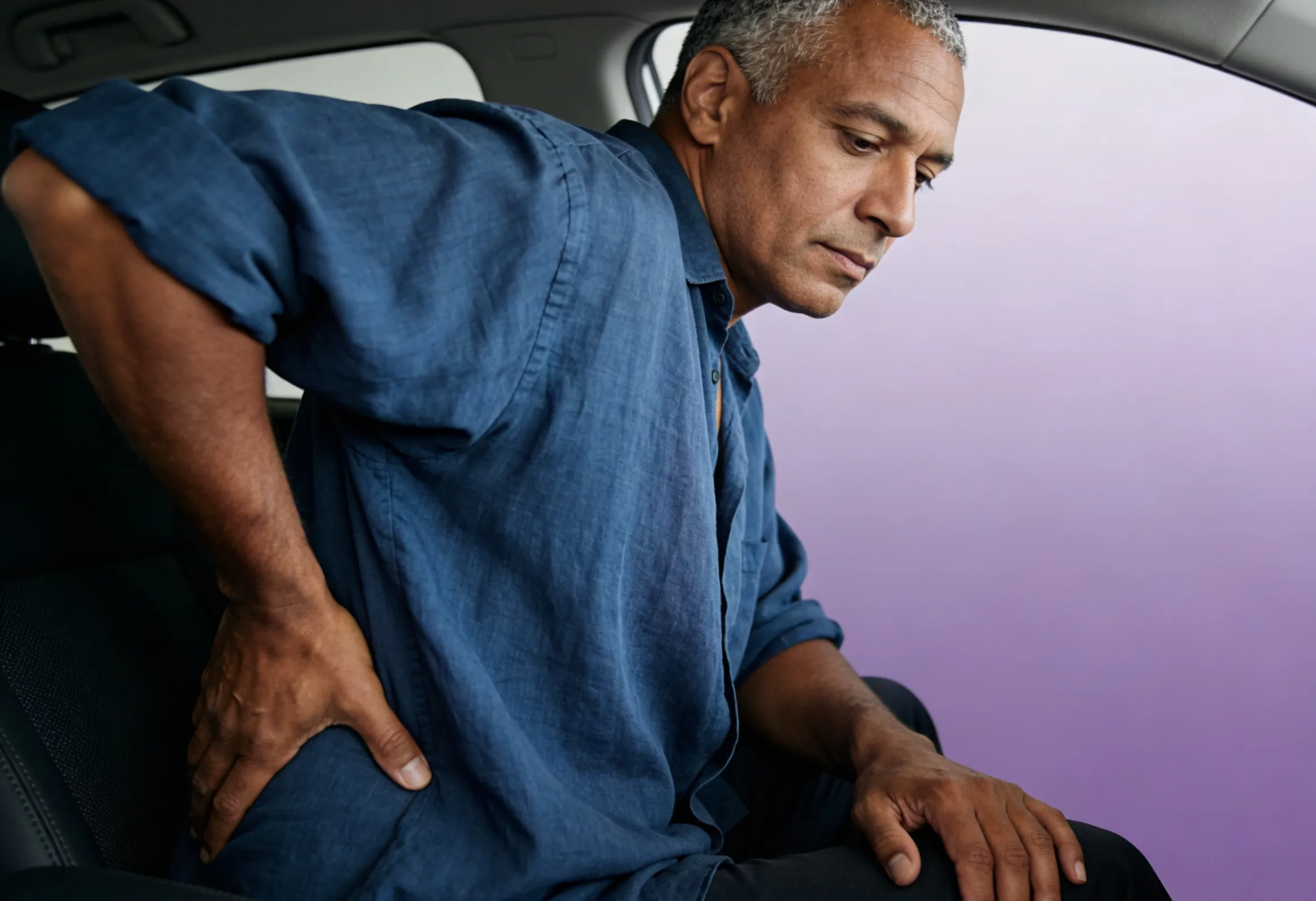
Managing a lower back flare-up on long drives

Dr Nicola Tik
A flare-up during or after a long drive can feel pretty miserable, especially when you still have a journey ahead of you or commitments waiting at the other end. This article will help you understand what is happening and give you some practical options for getting through it more comfortably.
Sitting in a car for a sustained period puts your lower back into a position it was not really designed to hold for long. The combination of a fixed posture, reduced blood flow, and road vibration can wind up the sensitive tissues in the area, making an existing niggle flare or a settled back start to grumble again.
This does not mean you have done damage. It is your body signalling that it needs a change of position and a little movement.
The most important thing is to stop as soon as it is safe and practical to do so. Even a five minute break makes a difference. Get out of the car, stand upright, and walk gently for a few minutes before getting back in.
If stopping is not immediately possible, try a gentle pelvic tilt. Press your lower back softly into the seat, hold for a few seconds, then release. Repeat this a few times. It will not resolve things completely, but it can take the edge off while you find a safe place to pull over.
Once you have stopped, it is worth taking a moment to check your seat before getting back in. A small adjustment can sometimes reduce the load on your lower back for the rest of the drive.
Try moving your seat slightly closer to the wheel so your knees are at a similar height to your hips, or just a little lower. If your seat has a lumbar support, bring it forward gently until you feel it making contact with the curve of your lower back rather than pushing into the middle of your back.
Shorter, more frequent stops are more helpful than one long break. If you are mid-flare, aiming for a stop every 30 to 40 minutes rather than every hour gives your back more regular opportunities to reset.
When you do stop, prioritise walking over sitting. A few minutes upright and moving is more useful than resting in a café chair, which keeps you in a similar position to the car seat.
Getting out of the car carefully makes a difference when your back is flaring. Swivel to face the door before standing, use the door frame for support if you need it, and avoid twisting as you get up.
Once you are out, a short gentle walk before you sit down again will help. If you would like to try a guided stretch to help things settle, VIDA has a short video you can follow at your own pace.
A heat pack on your lower back for 10 to 15 minutes after you arrive can help ease muscle tension. Over-the-counter anti-inflammatory tablets or gels are worth considering if the discomfort is making it hard to move around. As always, what helps varies from person to person.
If you notice tingling, numbness, or weakness spreading into your leg that does not ease after you have had a walk and a rest, it is worth speaking to your GP.
Your VIDA pain check-in is a good way to track how your back responds to driving over time, which can help you spot patterns and plan journeys more comfortably.