Lying comfortably when glute pain is recent

Dr Nicola Tik
When your glute or the side of your hip has started hurting recently, lying down can be the hardest part of the day. Lie on the sore side and it presses straight on the tender spot. Lie on the other side and your top leg drops forward, and the ache creeps back. This guide will help you find positions that ease the pressure, so you can get more comfortable at night.
Pain in the glute area can come from the muscles, the tendons that attach around the side of the hip, or sometimes from the lower back. Whatever the source, two things tend to make it worse at night.
The first is direct pressure. Lying on the sore side presses the tender area into the mattress for hours. The second is the position of your top leg when you lie on your other side. If your top knee drops down and forward onto the mattress, it stretches and squeezes the tissues around the outside of your hip. Researchers studying the tendons on the side of the hip have found this squeezing is a key reason the area becomes more sensitive.
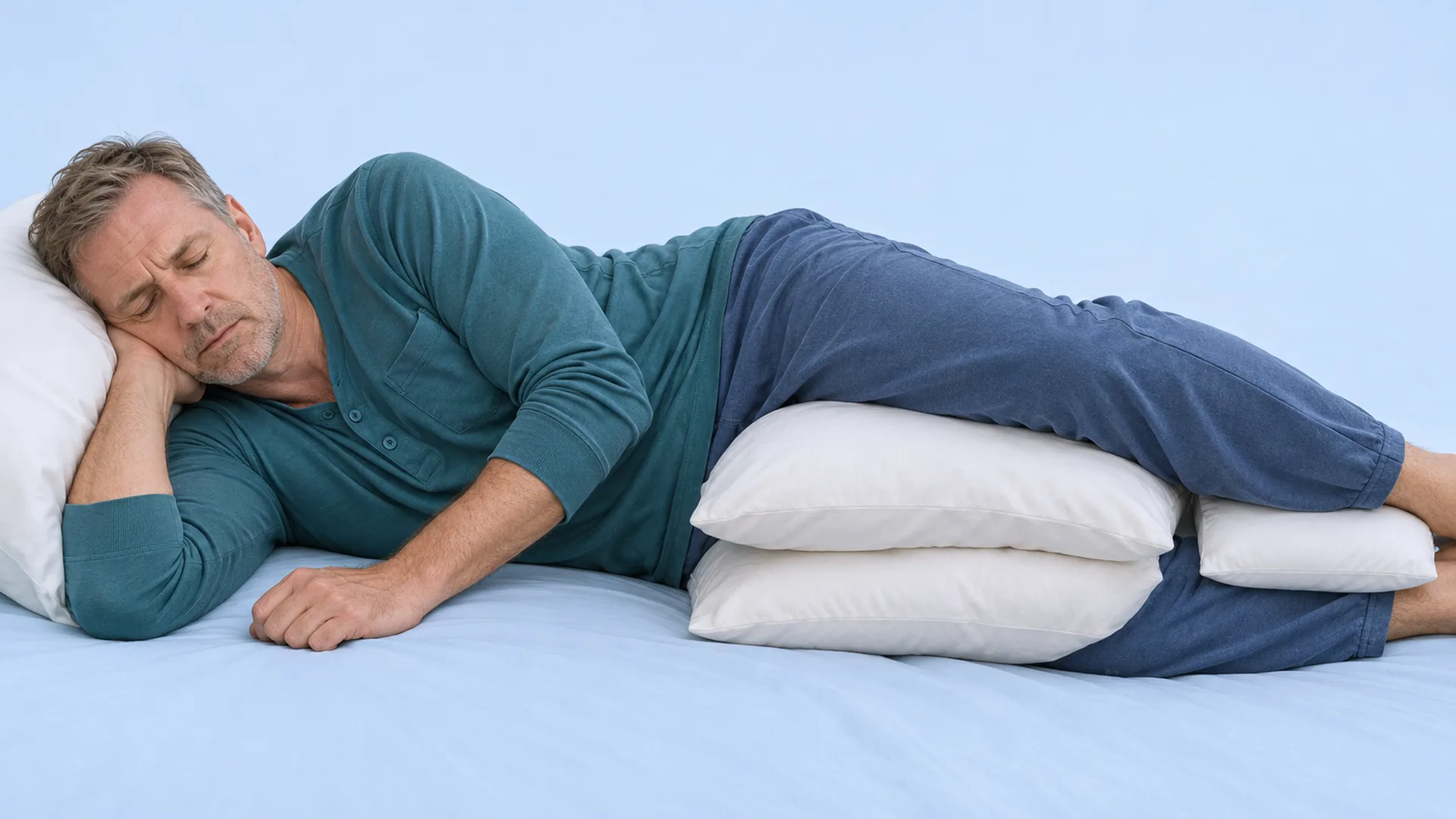
If you sleep on your side, lying on your pain-free side is usually the most comfortable choice. The key is stopping your top leg from dropping across your body.
Something to try is placing a pillow between your knees, and ideally one between your ankles too, so your top leg stays level with your hip. Many people find one pillow is not quite enough, so two stacked pillows, or a longer pillow that runs from knees to ankles, can work better.
Lying on your back takes pressure off both sides completely. Something to try is placing a pillow under your knees, which can help your lower back and hips relax. Keeping your legs slightly apart, rather than crossing your ankles, keeps the tissues around your hip more relaxed.
If you tend to roll onto your sore side during the night, a pillow tucked behind your back can help you stay in position. A softer mattress topper can also spread the pressure if you do end up on that side.
Some people find a position halfway between lying on their front and their side works well. The sore side faces upwards, and the top leg rests forward on a pillow.
Small habits during the day can help your glute calm down by bedtime. Some things to try:
If your glute wakes you, adjusting your pillows is usually the first thing to try. Check that your top leg is supported and level. If that doesn’t help, getting up and walking around slowly for a few minutes can ease the ache before you settle back down.
A heat pack on the area before bed can help the muscles relax too. Your VIDA pain check-in is a good way to keep track of how things are shifting over time.