Long-term knee pain around menopause and staying active

Dr Nicola Tik
When your knees have ached for a while, it is tempting to do less to protect them. You might skip the stairs, cut walks short or stop activities you used to enjoy. Around menopause, though, staying strong and active is one of the most helpful things you can do for persistent knee pain, and for your bones and muscles too.
Long-term knee pain is often linked with osteoarthritis. It involves changes to the cartilage and bone, as well as low-grade inflammation inside the joint. Knee osteoarthritis becomes much more common in women from midlife, and research suggests falling oestrogen may play a part, because oestrogen helps protect cartilage and keep inflammation in check.
That might sound discouraging, but knees respond well to the right kind of activity. Strength and movement are at the heart of how long-term knee pain is managed.
Exercise is one of the most effective approaches for long-term knee pain. In large education and exercise programmes for people with knee osteoarthritis, knee pain reduced by around a third on average, and many people used less pain relief afterwards.
Stronger thigh muscles help absorb load before it reaches the knee, and regular movement keeps the joint supple.
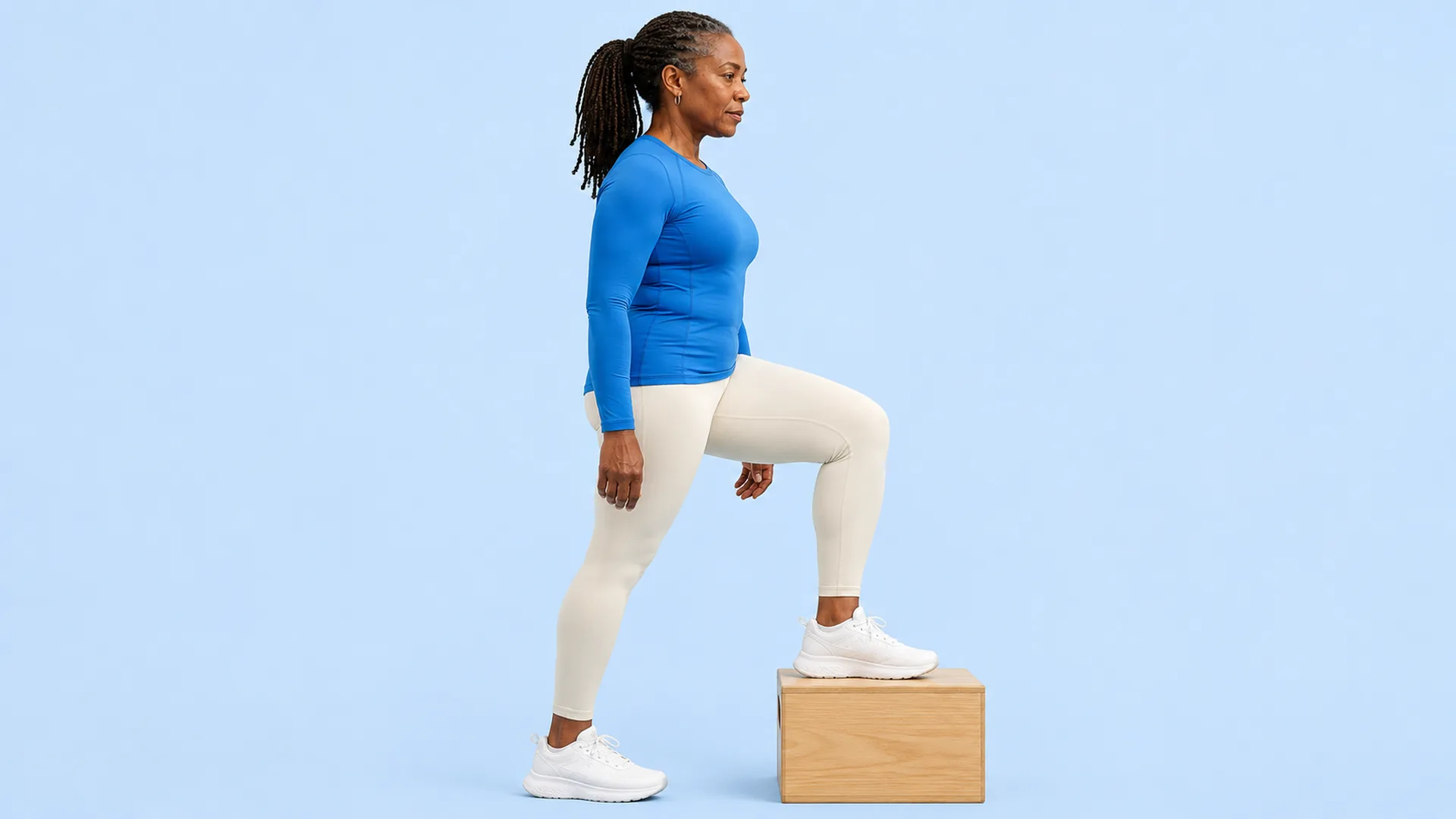
Something to try two or three times a week:
If you would like to follow along, VIDA has short videos of sit to stands, heel raises and bridges you can work through at your own pace.
A mild ache during exercise that settles by the next day is usually fine. On days when your knee is louder, gentler movement still counts.
Around menopause, bone thins more quickly. Weight-bearing activity, where your legs carry your body weight, sends a signal to your bones to stay strong. Walking, stair climbing and strength exercises all count.
This can feel like a balancing act with sore knees. The answer is usually to keep weight-bearing activity in your week, but build it up gradually, and mix in lower-impact options like swimming or cycling on days your knees prefer them. Bone and muscle both respond to being asked to do a little more over time, so the strength routine above supports your bones as well as your knees.
Every step puts more than your body weight through your knees. In one study of adults with knee joint changes, each kilogram of weight lost took around four kilograms of load off the knee with every step. If your weight has shifted around menopause, which is common, even small changes can make your knees feel noticeably easier.
Spreading activity across the day tends to suit knees better than doing a lot at once. Some ideas:
Progress with long-term knee pain tends to come from steady weeks rather than big leaps. Once your routine feels easier, you could add a few repetitions, step up onto a slightly higher step or carry a rucksack for sit-to-stands. Your VIDA pain check-in is a good way to notice your progress over time.