Long-term hip pain around menopause

Dr Nicola Tik
When hip pain has been part of life for a while, it can shape your day in small ways. You choose the lift over the stairs, pick the chair that is easier to get out of and feel stiff after every meeting. Around menopause, staying strong and active is one of the best things you can do for a persistent sore hip, and it helps the rest of you too.
Long-term hip pain is often linked with osteoarthritis. That involves changes to the joint surfaces as well as low-grade inflammation inside the joint, which is why hips can feel achy and stiff rather than simply worn.
Oestrogen helps protect cartilage and keep inflammation in check. As levels fall around menopause, many women notice their joints feel stiffer and more sensitive. Muscle also declines more quickly in midlife, so the hip has less support.
The encouraging part is that both muscle and joint respond well to the right kind of activity.
Exercise is one of the most effective approaches for long-term hip pain. In large education and exercise programmes for people with hip osteoarthritis, hip pain reduced by around a quarter on average, and many people used less pain relief afterwards.
Stronger muscles around your hip help support the joint, and regular movement keeps it supple.
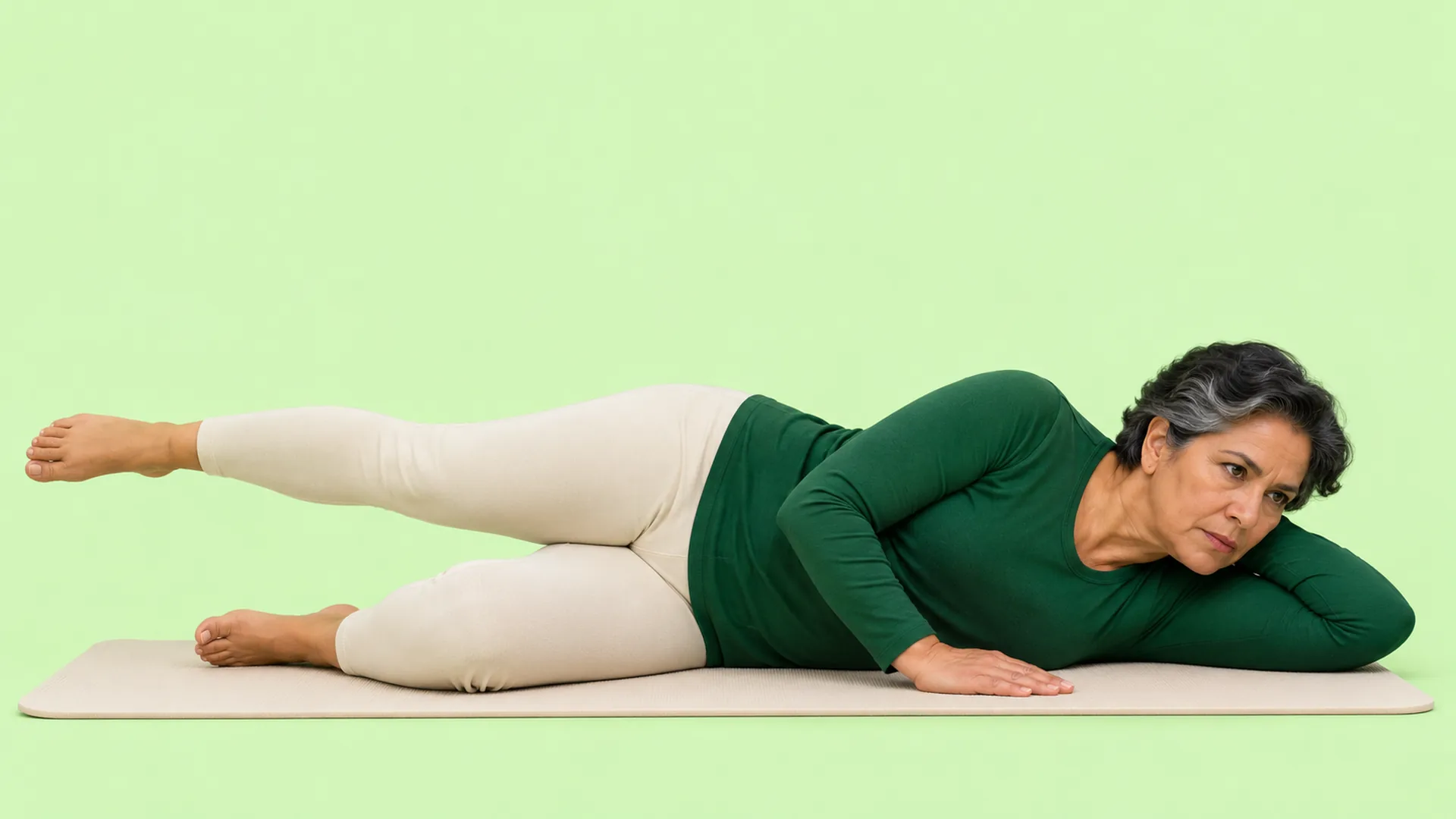
Something to try two or three times a week:
If you would like to follow along, VIDA has short videos of sit to stands and bridges you can work through at your own pace. Start with a few repetitions and build up gradually.
A mild ache during exercise that settles by the next day is usually fine. On days when your hip is louder, gentler movement still counts.
Regular activity helps your hip and supports your bones and heart through midlife. Walking is a great foundation. Swimming and cycling are good options on days when your hip prefers less impact.
Spreading activity across the day tends to work better than doing a lot at once. Several short walks often feel easier on a hip than one long one. If your hip is sore after a walk, it does not mean you have done harm. It is a sign to keep the next walk a little shorter or slower, then build again.
Stiffness tends to build when you stay still. Some things that can help:
Hip pain often feels louder at night, and broken sleep around menopause adds to it. Lying on your pain-free side with pillows between your knees and ankles, or on your back with a pillow under your knees, can help. A cool bedroom helps with night sweats.
Progress with long-term hip pain tends to come from steady weeks rather than big changes. Once your strength routine feels easy, you could add a few repetitions or hold a rucksack for sit-to-stands. Your VIDA pain check-in is a good way to notice your progress over time.