Goal: Hold a steady plank
Knee planks when your knees ache

Dr Nicola Tik
The forearm plank on your knees is a great way to build strength, but kneeling on a hard floor isn’t always comfortable when your knees ache. There are a few ways to take the pressure off and keep working towards your goal.
When you kneel, your weight presses through the front of your knee and kneecap. If your knees are already sore, this pressure can make the knee plank feel uncomfortable, even though the rest of your body is fine.
You could try:
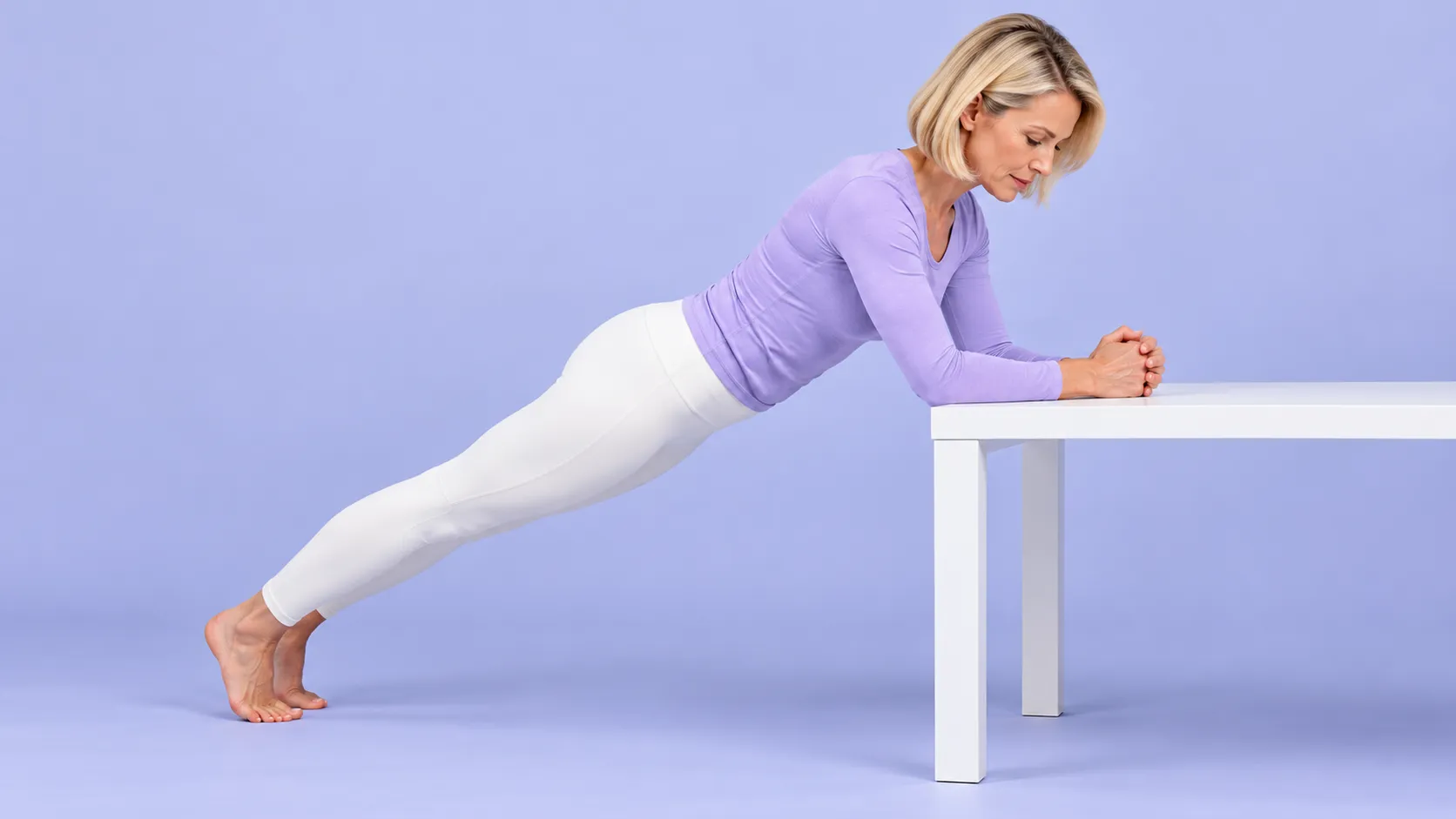
The forearm plank on your toes doesn’t put pressure on your knees, so it may feel more comfortable. If the full plank feels too hard, an elevated forearm plank on a sturdy table or worktop, on your toes, is an easier option that avoids kneeling.
Exercise is one of the main recommendations for long-standing knee pain. In a forearm plank on your toes, your thigh muscles work to keep your legs straight, which can also support your knees.
The main cues still apply: elbows under shoulders, press the floor away, gently squeeze your bottom and keep a straight line. Stop when your form starts to slip.
A few shorter holds with rests are a good way to build up comfortably.
Try an elevated forearm plank on your toes, using a kitchen worktop or sturdy table, for three short holds.