Knee bursitis and kneeling more comfortably

Dr Nicola Tik
A soft, puffy swelling at the front of your knee, sometimes after a weekend of gardening, laying a floor or scrubbing the bathroom. Kneeling becomes uncomfortable, and the swelling can be a bit alarming to look at. Knee bursitis is common, and with a few changes to how you kneel, it usually settles well.
A bursa is a small, fluid-filled sac that acts like a cushion between bone and skin, helping them glide smoothly. You have one just in front of your kneecap, and another just below it.
Knee bursitis means one of these bursae has become irritated and filled with extra fluid. It most often happens after a lot of kneeling, like gardening, cleaning, tiling or some types of work. It can also follow a knock or fall onto the front of the knee.
You might notice:
The joint itself is usually fine, and you can often bend and straighten your knee without much trouble.
Knee bursitis usually settles when the pressure on the front of the knee is reduced. The extra fluid gradually reabsorbs, and the swelling goes down. It can take a few weeks to settle fully, and the swelling can come back if you return to lots of kneeling too quickly. If you have been given advice by your GP or a physiotherapist, keep following that.
The most helpful step is taking pressure off the front of your knee for a while. Some ideas:
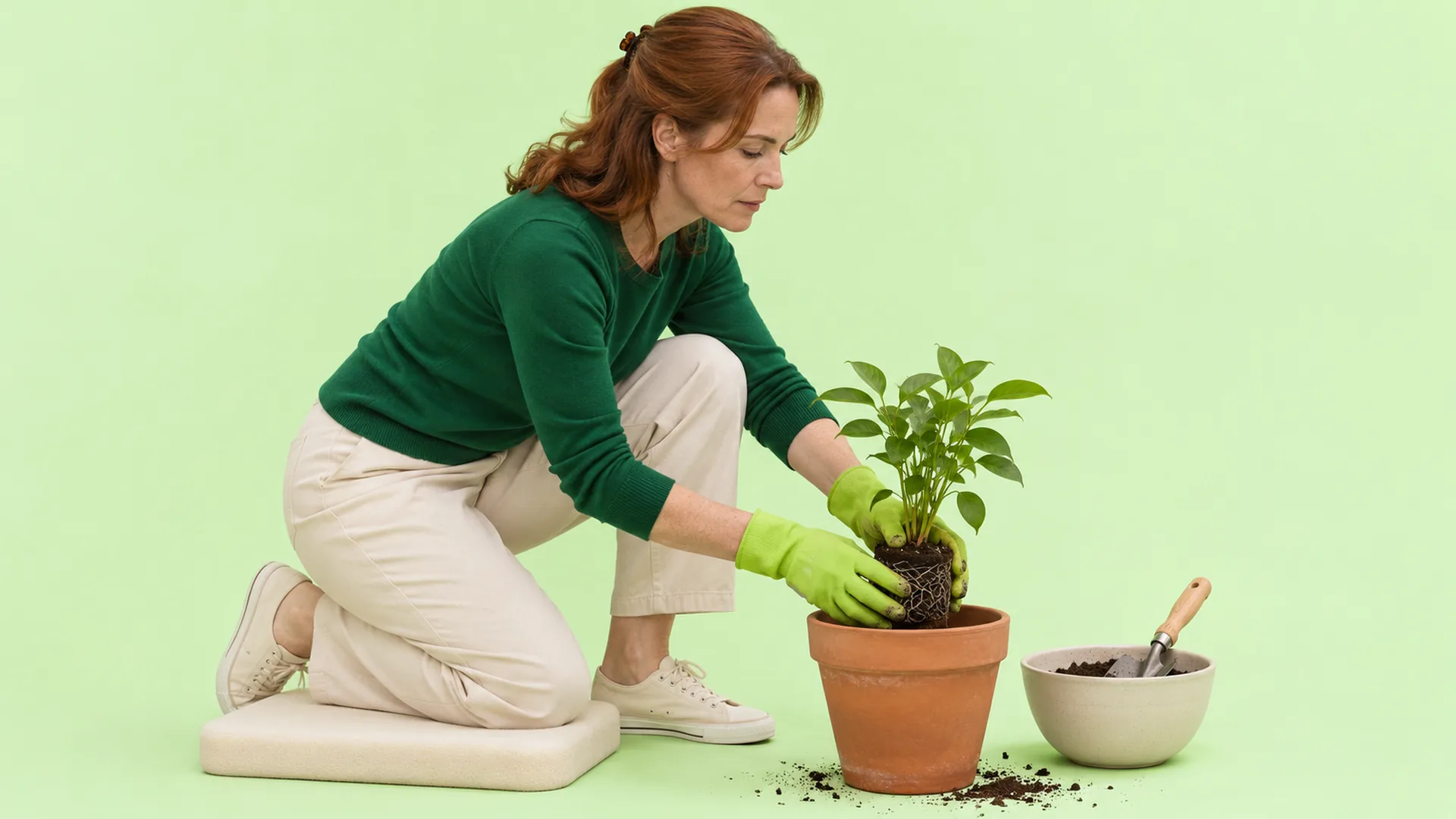
When you do need to kneel, small changes can protect your knee:
For work that involves a lot of kneeling, it may help to talk to your employer about knee protection or varying your tasks.
Gentle movement helps your knee stay supple while the swelling settles. Something to try a few times a day:
Keep within a comfortable range. If you would like a guided stretch, VIDA has short videos you can follow at your own pace.
Strong thigh muscles help support your knee, and staying active helps it recover. Something to try a few times a week, as long as it does not press on the sore area:
If you would like to follow along, VIDA has short videos of sit to stands, bridges and heel raises you can use at your own pace.
Walking, cycling and swimming are good ways to stay active while your knee settles.
If the skin over your knee is broken, scratched or grazed, keeping it clean and covered can help prevent infection, especially if you are kneeling on soil or rough surfaces.
If your knee becomes hot, red and increasingly painful, especially if you feel feverish or unwell, it is worth speaking to your GP straight away.
Your VIDA pain check-in can help you notice how your knee settles over time.