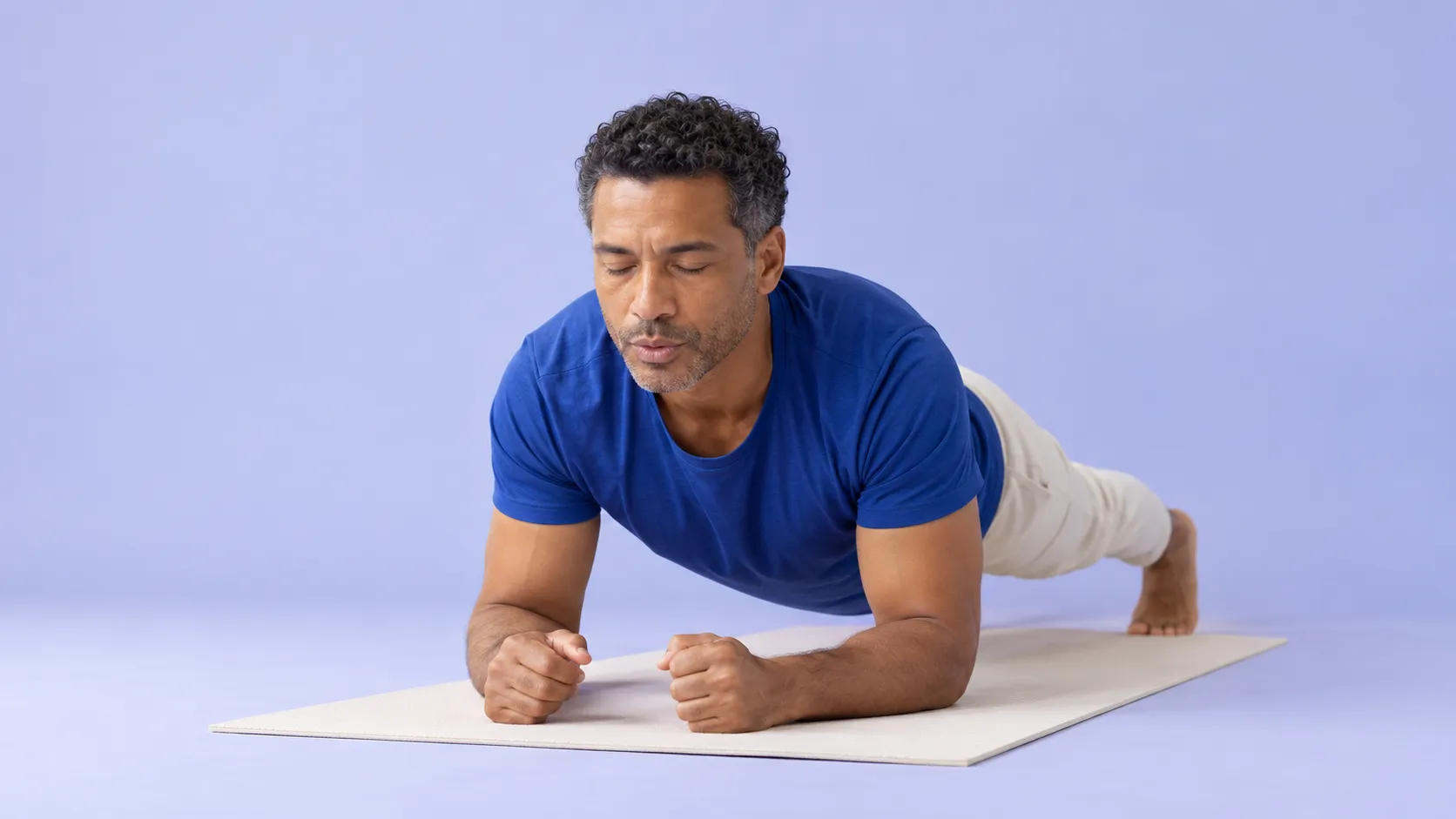
Goal: Hold a steady plank
Keeping your plank steady as holds get longer

Dr Nicola Tik
Towards the end of a longer plank, something changes. You might still be up, but your shape isn’t quite what it was at the start. Learning to keep the same plank when you’re tired is the main skill at this stage, and it’s what turns extra seconds into real strength.
Research on 60-second planks found that the stomach muscles were the first to tire. As they did, people’s spine shape gradually shifted. Some people’s lower backs arched more as their hips dropped, while others changed shape in different ways. These changes happen slowly, so they’re easy to miss while you’re focused on holding on.
When your shape changes, other muscles start to take over. The stomach muscles you’re trying to build may get less of the work, and your lower back may get more. Those last seconds then count for less than they feel like they should.
A quick reset halfway through a hold can help you keep your shape for longer. You could try:
It only takes a couple of seconds, and many people find it buys them more good-form time.
If a reset doesn’t bring your shape back, the hold has done its job. Finishing there, rather than pushing through with a changed shape, keeps your training working where you want it to.
In your longer holds, try a mid-hold reset at roughly the halfway point. Notice whether your shape lasts longer towards the end.