Keeping steady on uneven or unstable ground

Dr Nicola Tik
Working on ground that will not stay flat, rutted yards, loose gravel, muddy sites, slopes, keeps your knees and ankles working overtime. Every time your footing shifts they make tiny corrections to keep you balanced, and over a day that adds up. A steadier base and the right footing take a lot of that hidden work away.
On flat, even ground your knees and ankles have an easy, predictable job. On uneven or loose ground, they are constantly adjusting to stop you rolling, slipping or wobbling, and those small corrections never really stop. That is why the ankles and knees feel it, even without a trip or a fall. It is the ongoing balancing act, not one big moment, that wears on them. Reducing how hard your joints have to fight for balance is the goal.
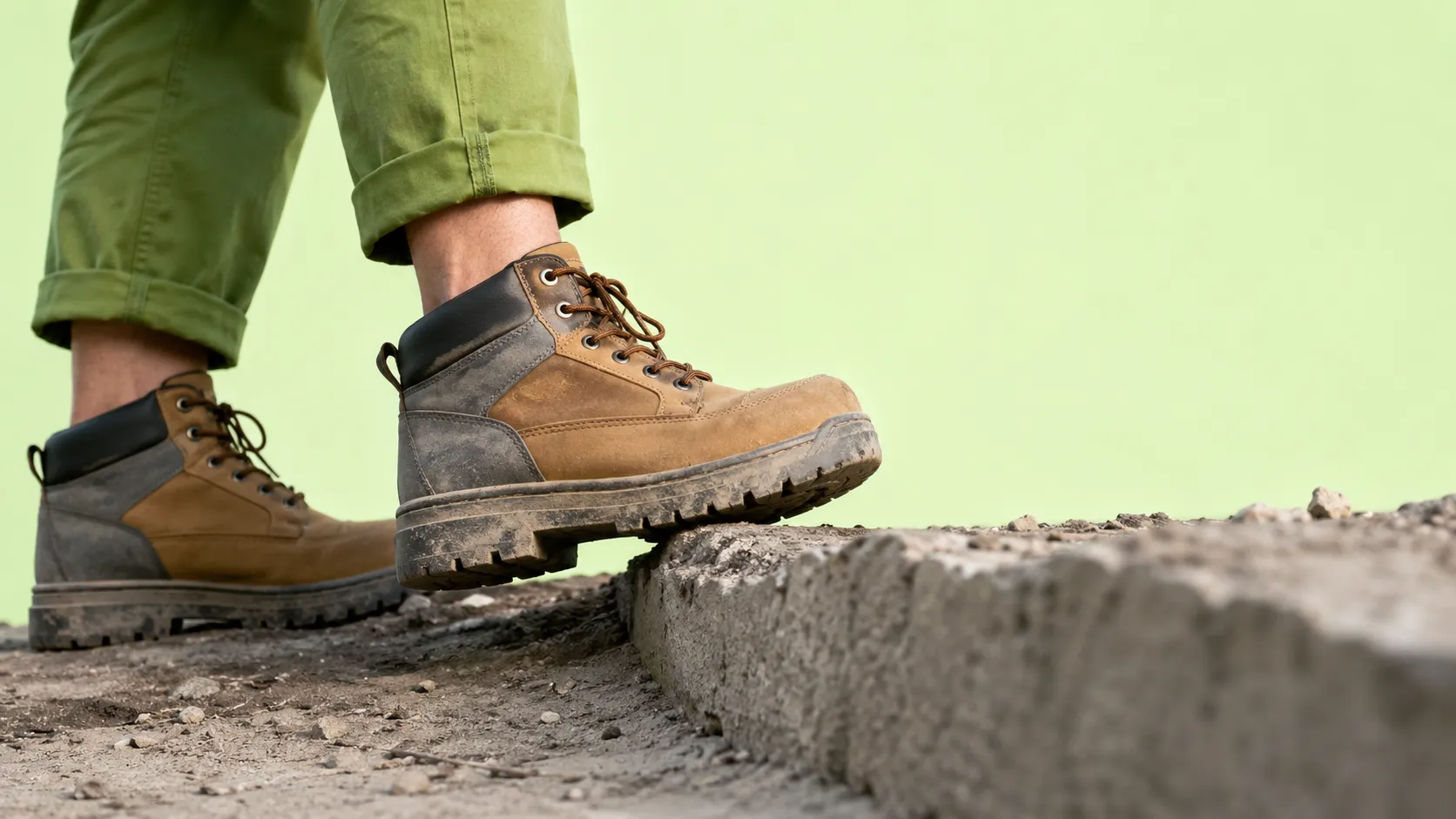
Footwear is your first line of steadiness. Good grip and a sole that suits the surface, whether that is mud, gravel or a smooth ramp, stops your feet sliding and your joints scrambling to correct. Support around the ankle helps on rough ground, and a decent fit means your foot is not shifting inside the boot. Keeping the tread clean and replacing worn soles matters more than people think, since a smooth sole on a slope does your ankles no favours at all.
How you stand and move changes how steady you are. Taking shorter, deliberate steps on rough or loose ground, and keeping your feet a bit wider apart, gives you a more stable base than long, quick strides. Planting your foot fully before putting your weight through it, rather than rushing, lets you feel the ground first. On slopes, taking them at an angle and keeping your weight balanced over your feet is easier on the knees than heading straight up or down.
A lot of ankle and knee tweaks on uneven ground come from moving too fast for the surface. Slowing down where the footing is poor gives your joints time to react. Keeping your hands free to balance, rather than overloaded, helps you catch yourself if you slip. Using handrails, and looking ahead to pick your route around the worst of the ruts, mud or loose stuff, means fewer moments where your joints have to save you. A clearer, tidier route is a steadier one.
If your knees or ankles ache after a day on rough ground, gentle movement usually helps them settle. A short walk on level ground, some easy ankle circles and knee bends, or a little warmth often take the edge off. Keeping moving through the evening tends to help more than seizing up. What works varies from person to person, so it is worth seeing what settles yours.
If you would like to try a guided lower-leg and knee stretch, VIDA has a short video you can follow at your own pace.