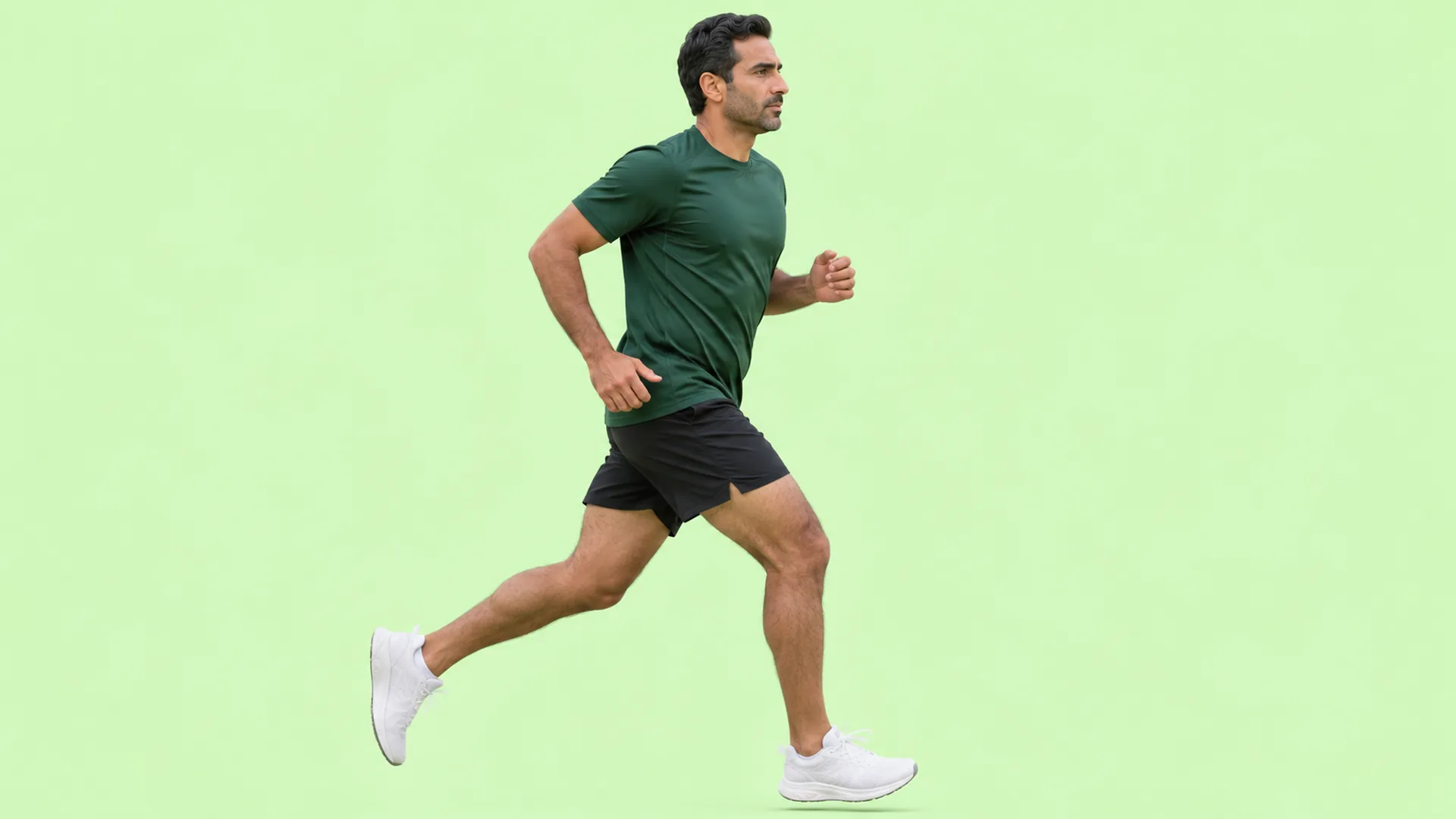
Keep running and squatting with knee pain

Dr Nicola Tik
A sore knee rarely means you have to stop running or squatting. Adjusting how much and how you do them usually lets you keep going while your knee settles.
Running is not bad for knees. Research suggests recreational runners are no more likely to develop knee osteoarthritis than people who do not run. When your knee is sore, though, you could try:
Deep, heavy knee bends ask the most of a sore knee. For a while, you could:
Lunges often feel easier as reverse lunges, stepping backwards, than forward lunges.
Some discomfort while you train is fine. A useful rule is that pain during a session stays mild, around 3 or 4 out of 10 at most. It should settle by the next morning without extra swelling. If it is still higher the next day, ease back a little next time.
These build the muscles that protect your knee when you run and squat. Choose the level that fits how your knee feels today.
VIDA has short videos of lunges and heel raises if you would like to follow along.
Once your knee has felt steady for a week or two, add a little at a time. A few more minutes of running, or a little more weight or depth, is enough. Change one thing, then hold for a week before changing another.
Your VIDA pain check-in is a good way to see which runs and sessions your knee is happy with.
On your next run, try slightly shorter, quicker steps and notice how your knee feels.