Joint awareness and load management around ovulation

Dr Nicola Tik
Ovulation is not something most people think about in terms of physical awareness, but it is worth knowing about. This article explains what happens to your joints around this point in the cycle and how to move comfortably through it.
Around ovulation, oestrogen peaks and the body releases a hormone called relaxin. Relaxin's primary role is to increase the flexibility of ligaments and connective tissue. This is useful for the body's longer-term reproductive function, but it also means that joints are temporarily a little more mobile and potentially a little less stable than usual.
For most people this goes completely unnoticed. For those who are more physically active or who already have a joint that tends to be sensitive, it can occasionally show up as a feeling of looseness, mild aching, or a sense that a joint is not quite behaving as expected.
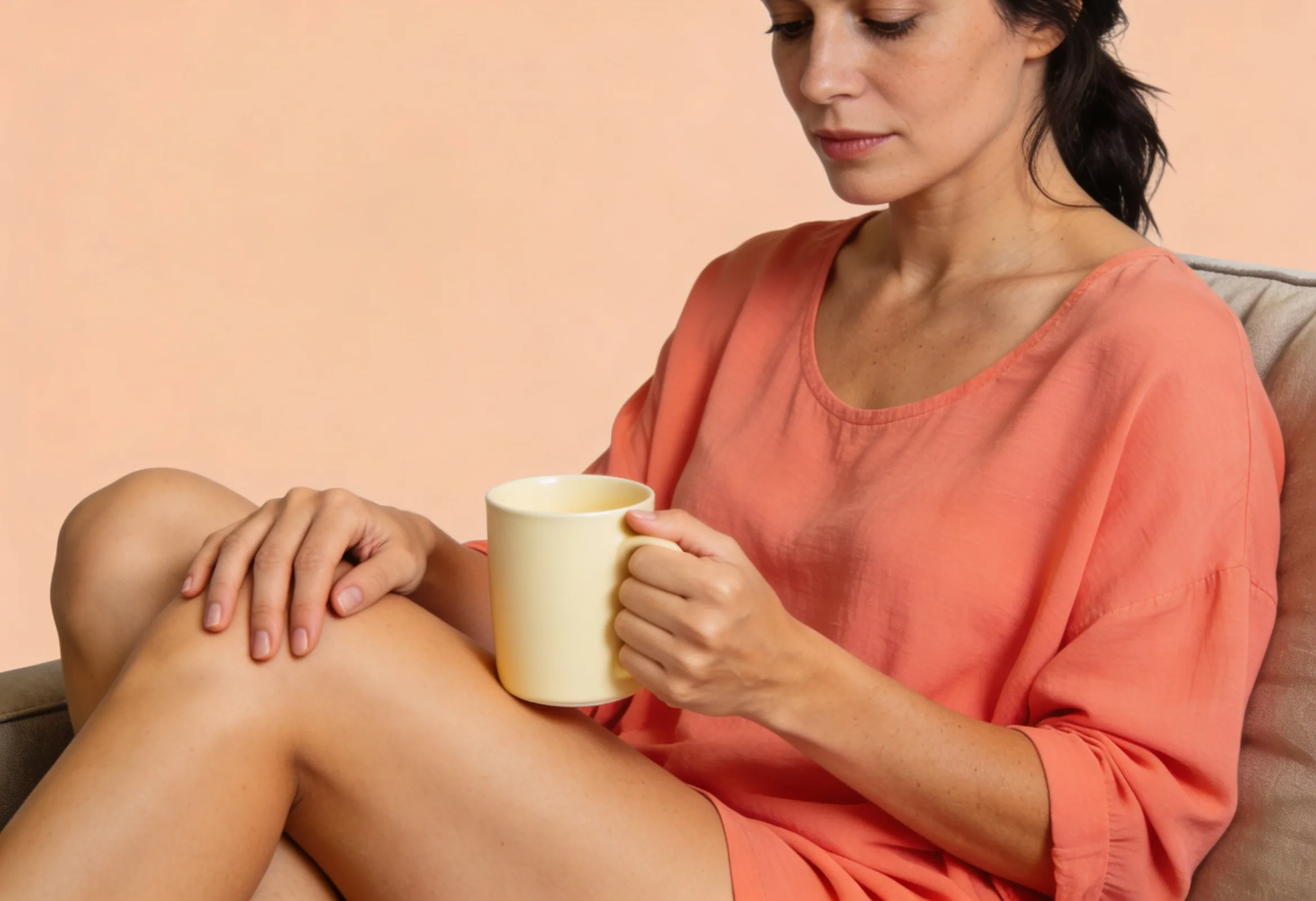
The knees, hips, and pelvis are the areas where this is most commonly felt, partly because they carry the most load during everyday movement and partly because ligament laxity has more opportunity to be noticed in weight-bearing joints.
For office-based workers it is unlikely to be significant during a typical working day. It is more likely to be noticeable during a longer walk, a gym session, or any activity that involves more dynamic movement than usual.
No special adjustments are needed for most people. A light awareness of how your joints feel during more active periods around this time is useful, and if something feels a little less stable than usual, easing off rather than pushing through is a sensible response.
Warming up gradually before more demanding movement makes good sense around ovulation. Giving your joints and surrounding muscles a few minutes to prepare before a walk or a more active session reduces the demand on ligaments that may be slightly more lax than usual.
Strength in the muscles surrounding key joints, particularly the hips and knees, provides a natural support system during periods of increased ligament flexibility. Simple exercises like slow sit-to-stand movements or gentle hip strengthening a few times a week support this well without requiring a gym.