How to make an awkward home desk setup feel better

Nicola Tik
Working from home does not always mean working comfortably. A laptop at the kitchen table, a chair that is not quite right, or a screen that sits too low can all leave your neck, shoulders, or back feeling more tired than they need to.
The good news is that you usually do not need new equipment to make things feel better. This guide walks you through a few simple changes you can make with what you already have.
Before changing everything, take a moment to notice what feels uncomfortable.
You might find that your neck feels tight from looking down at a laptop. Your shoulders may feel tense if your arms are reaching too far forward. Your lower back or hips may feel stiff after sitting for a while.
The aim is not to create a perfect desk setup. It is simply to reduce the strain on the areas that feel it most.
Small adjustments often make a bigger difference than expected.
You could try:
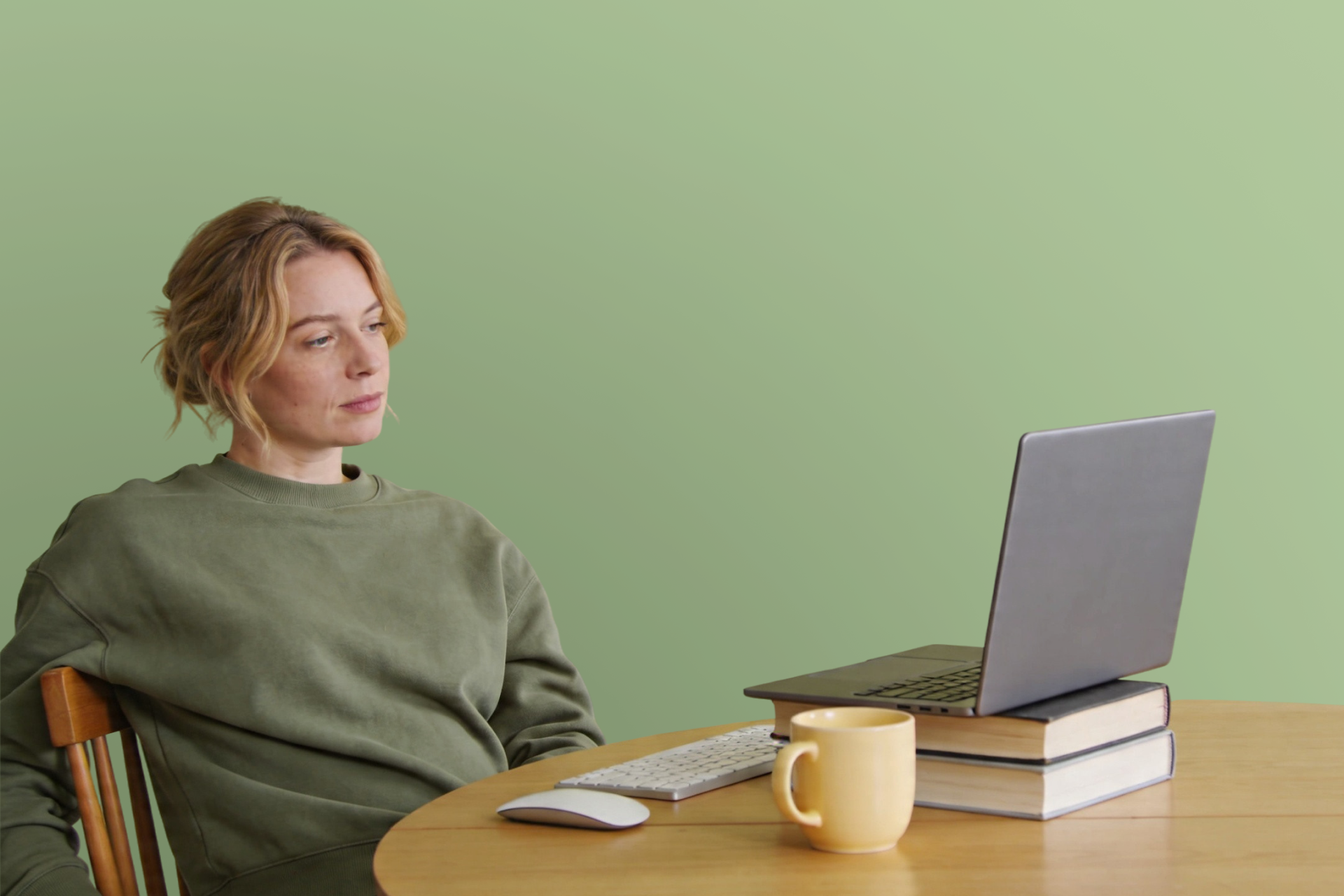
• Raising your laptop or screen with a few books so it sits closer to eye level.
• Sitting on a firm cushion or folded towel if the chair feels too low.
• Resting your feet on a small box or stack of books if they do not reach the floor comfortably.
• Bringing your screen slightly closer so you do not lean forward.
These simple changes can help your neck and back stay more relaxed while you work.
A common home desk habit is sitting slightly forward, instead of sitting back and letting the back of the chair support you. This often happens when the screen is a little too low, too far away, or harder to see comfortably.
Over time, that small forward lean can make the neck, shoulders, and upper back work harder than they need to.
It may help to bring the screen a little closer and allow your back to rest against the chair. Many people find that once the screen is easier to see, the body naturally settles into a more comfortable position.
Many people assume they need to sit in one perfect position all day. In reality, your body usually prefers variety.
It may help to let your back rest against the chair and allow your shoulders to soften. If the chair feels flat, placing a small cushion or rolled towel behind your lower back can provide gentle support.
Changing position during the day often matters more than finding the “right” posture.
Home working often means using a laptop for long stretches, and that can leave you looking down more than you realise. Over time, that can make the neck and shoulders work harder than they need to.
The tricky part is that the screen and keyboard are attached. If you raise the laptop to make the screen easier on your neck and eyes, the keyboard can bring your hands and wrists too high. If you keep the keyboard in a better place for your arms, the screen often ends up too low.
That is why an external keyboard and mouse can make such a difference. They let you raise the screen to a better height while keeping your hands and arms lower down in a more comfortable position.
If you use a laptop for most of the day, this is one of the simplest changes you could make to help home working feel easier on your neck, shoulders, and wrists.
Even the best setup can start to feel uncomfortable if the body stays still for too long.
Short movement breaks can help your joints and muscles reset. Standing up, walking for a minute, or gently turning through your upper back can help the body feel less stiff.
Many people find that these small breaks make a noticeable difference by the end of the day.
If your body starts to feel tight, try taking a short movement break.
Stand up and roll your shoulders slowly. Then try a small turn through your upper body to each side. After that, take a few slower breaths and allow your ribs to move as you breathe in.
Keep the movement easy and within a comfortable range.
If you would like guided stretches, VIDA has short exercise videos you can follow at your own pace.
You do not need a perfect home office to feel more comfortable. Small changes to your screen height, chair support, and movement through the day can make an awkward desk setup feel much easier on your neck, shoulders, and back.