Goal: Hold a steady plank
How the other moves in your plank sessions help

Dr Nicola Tik
Your plank sessions include more than planks. You’ll see dead bugs, bird dogs and side planks too, and it’s fair to wonder what they’re for when your goal is a longer front plank. Each one strengthens a different part of what keeps you steady, so they all feed into the plank.
A front plank mainly stops your body sagging towards the floor. A side plank trains the muscles along your sides, which stop you tipping or twisting. Research shows the muscles wrapping around your waist are among the most active in a side plank. They help keep your hips level in a front plank, especially when you start to tire.
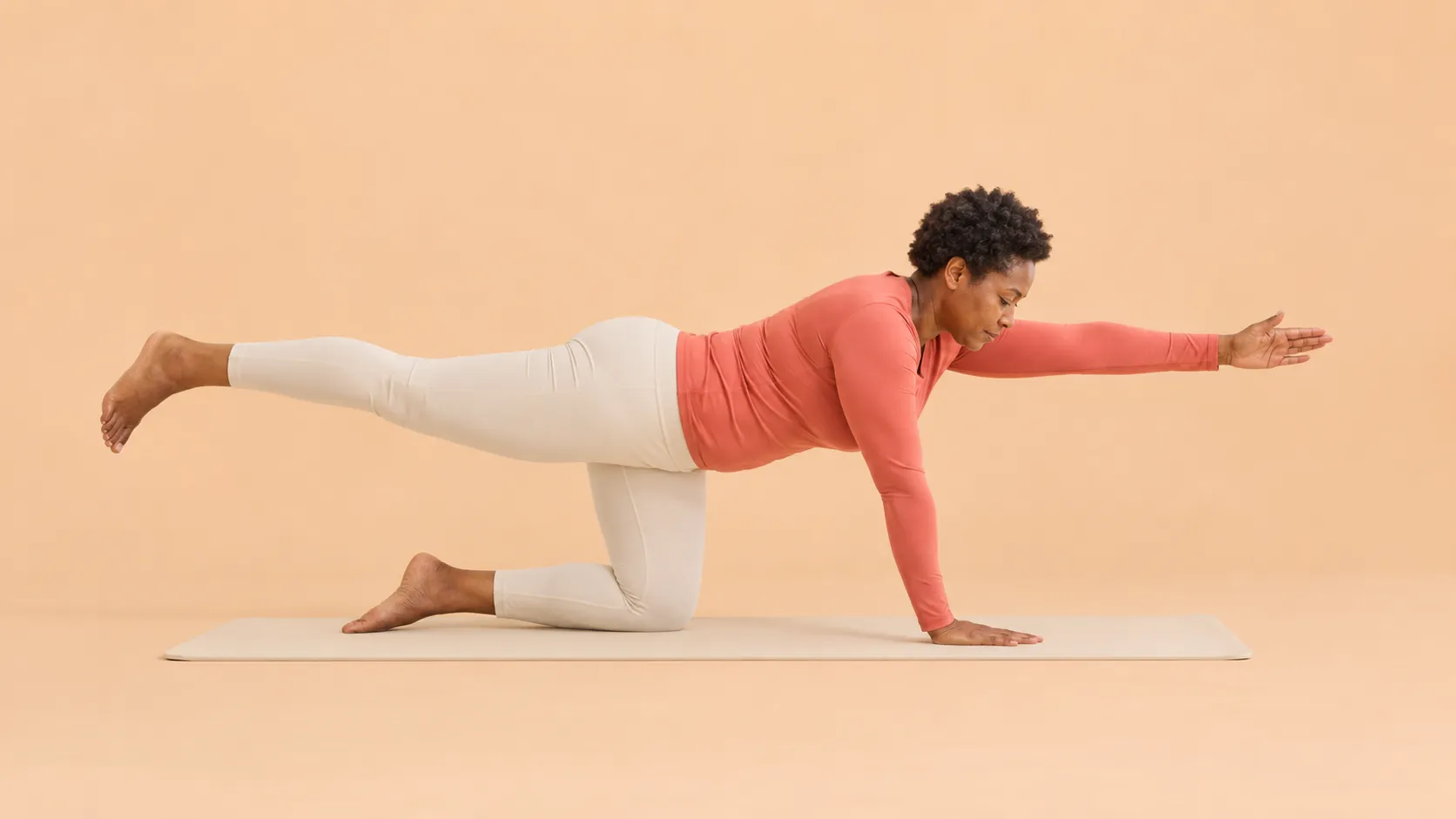
On your hands and knees, reaching one arm and the opposite leg trains the muscles along your back and around your hips. The back muscles tend to be the most active in this move. In a plank, these muscles balance the work of your stomach, helping keep your body in one long line.
Lying on your back and moving your arms and legs while keeping your back still trains the deeper muscles around your middle. Research shows these deep layers are active in this kind of exercise. They teach your trunk to stay steady while the rest of your body moves, which is exactly what it needs to do when you’re tired in a plank.
Forearm planks on your knees use the same muscles as on your toes with a lighter load, so they let you practise good form for longer.
A strong plank depends on every side of your trunk working together. If one area tires first, your form slips. Training each side means your plank becomes steadier overall, rather than relying on one group of muscles to do all the work.
You could give each move in the video the same care as the plank itself. Notice which one feels hardest. That’s often the area with the most room to build, and it may be what’s holding your plank back.