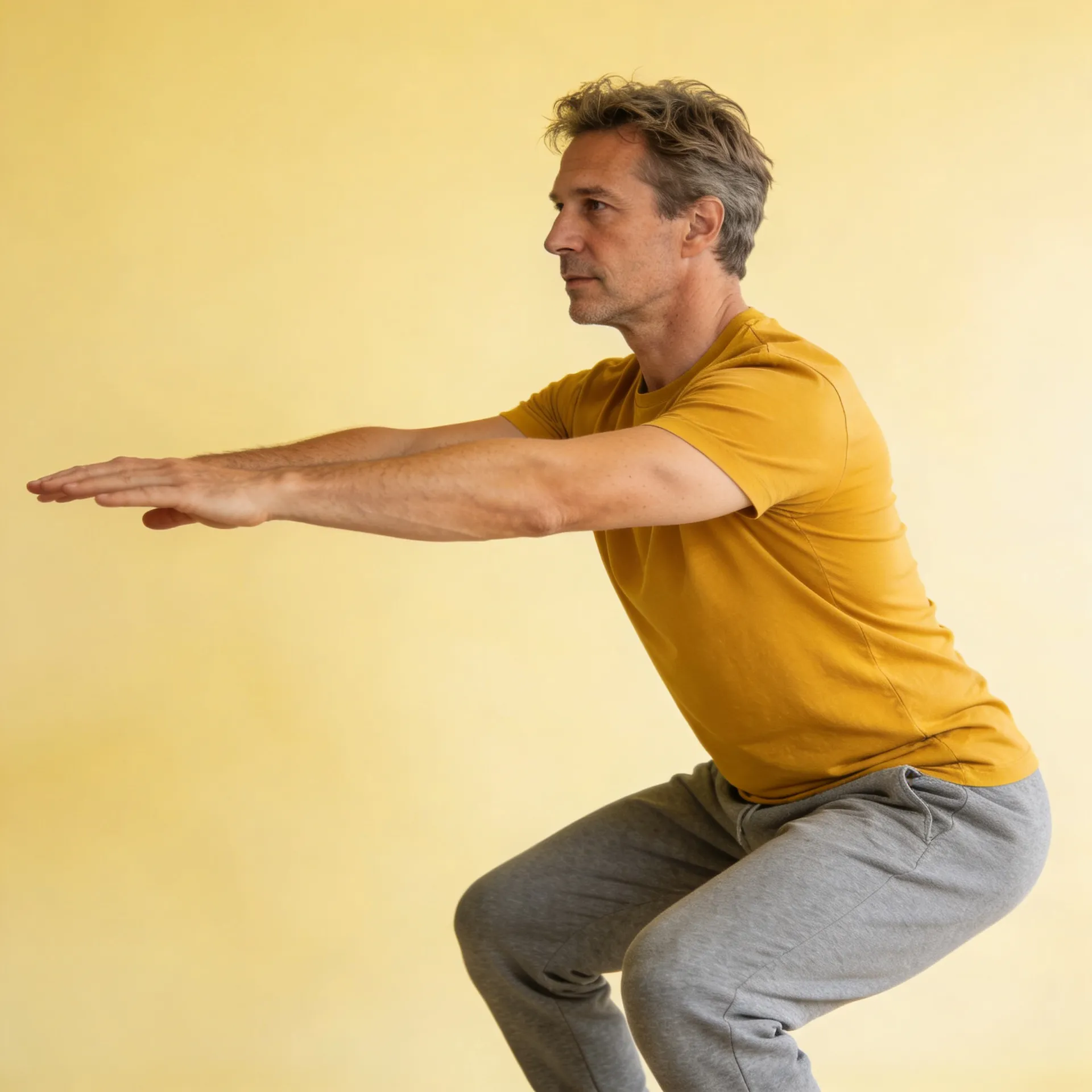
How many squats you can do and why it matters more than you think

Dr Nicola Tik
The number of squats you can complete in thirty seconds might seem like a straightforward fitness measure, but it is actually one of the more informative indicators of lower body function and long-term musculoskeletal health. This article explains what the squat test is measuring, why lower body strength matters beyond the gym, and what a clear and achievable path to improvement looks like.
Completing squats repeatedly within a time limit tests not just strength but the endurance of the muscles of the thighs, hips, and glutes under repeated load. That combination of strength and endurance, often called functional lower body capacity, reflects how well the legs can manage the demands of everyday movement over time rather than simply how much force they can produce in a single effort.
The squat pattern itself, bending and straightening through the hips and knees under load, is one of the most fundamental movements the body performs. Sitting down and standing up, climbing stairs, lifting from a low surface, and most recreational activities all draw on the same muscle groups and movement pattern that the squat test assesses.
Lower body strength is one of the most consistently supported factors in long-term musculoskeletal health across the research literature. Strong legs and hips protect the knee and hip joints by absorbing and distributing load more effectively during movement. They support the lower back by reducing the demand on the spine during lifting and carrying. They maintain balance and stability, reducing the risk of falls and the joint strain that comes from unsteady movement.
Research consistently shows that people with better lower body strength report lower rates of knee and hip pain, better function with everyday tasks, and greater resilience to the physical demands of work and recreation. The relationship between lower body strength and quality of life over time is one of the strongest in the MSK evidence base.
A lower result on the squat test most commonly reflects a lifestyle that has not included enough regular lower body loading over time. Sedentary work, limited exercise, and the gradual reduction in activity that tends to accompany busy modern life all contribute to a reduction in lower body strength and endurance. It is rarely the result of anything more significant and is very responsive to consistent and progressive effort.
Periods of reduced activity following illness, injury, or significant life changes can also reduce lower body capacity, and those reductions tend to be among the most responsive to a gradual return to activity.
The most effective approach to improving lower body strength is progressive and consistent loading over time. Starting with what is currently manageable and gradually increasing the demand over weeks and months gives the muscles, tendons, and joints time to adapt alongside each other.
Bodyweight squatting is a natural starting point, since it mirrors the test directly and can be done anywhere without equipment. Progressing from partial range to full range, then adding repetitions, then adding load over time, builds capacity in a way that translates directly to the test and to everyday function.
Walking, particularly on varied terrain or with some incline, builds lower body endurance alongside strength work and supports the cardiovascular fitness that sustains performance across a longer set of repetitions. Stair climbing is similarly useful and accessible for most people.
Two to three short strength sessions per week focused on the lower body, done consistently over several months, tends to produce meaningful improvement in squat test performance and in the broader lower body function that the test reflects.
If you would like to try a guided lower body strength exercise, VIDA has a short video you can follow at your own pace.