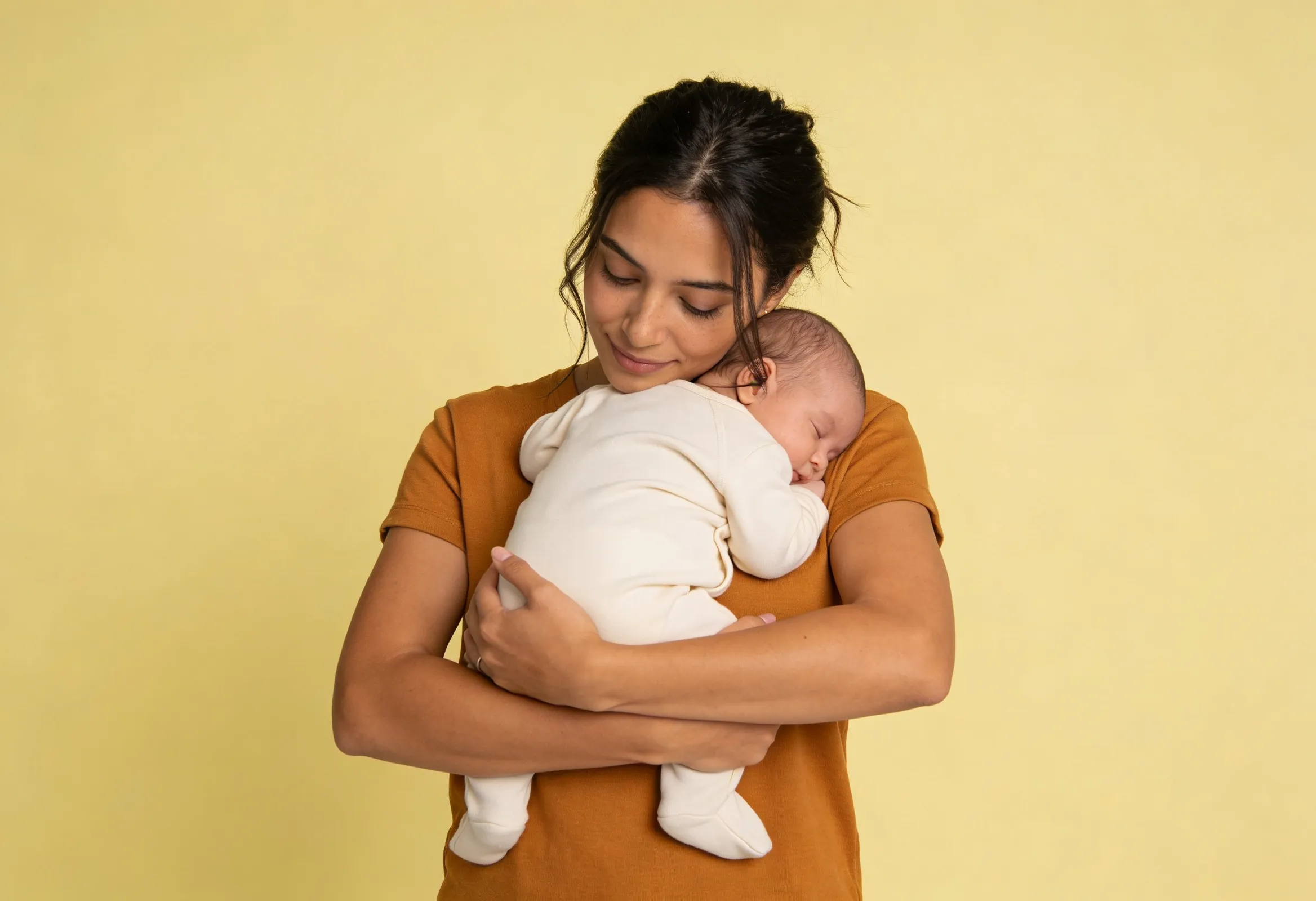
Hip pain as a new parent

Dr Nicola Tik
Becoming a parent changes almost everything about how you move through the day, and your hips often bear a significant part of that load. If yours have been uncomfortable since your baby arrived, this article explains why and what can help.
The early weeks and months of parenthood involve a lot of repetitive movements that put sustained demand on the hips. Lifting, carrying, feeding in fixed positions, and getting up and down from the floor repeatedly all add up quickly. For those who have recently given birth, the hips may also still be adjusting after the physical changes of pregnancy, when the ligaments and joints around the pelvis were under additional strain.
Poor sleep and fatigue mean your body has less capacity to recover between these demands, which can make the hips feel sore even when the individual tasks seem small.
Varying how you carry your baby makes a real difference. Alternating sides when carrying, rather than always favouring one hip, spreads the load more evenly. If you use a sling or carrier, checking the fit is worth doing as a poorly fitted carrier can push your hips into an awkward position over time.
When feeding in a seated position, try to sit with both feet flat on the floor and your weight evenly distributed rather than leaning or twisting to one side.
Getting up and down from the floor is one of the most repetitive demands of early parenthood. Rolling onto one side before pushing up, rather than rising straight from sitting, reduces the effort going through the hips and makes the movement easier on your body overall.
Short walks, even just around the block, are one of the kindest things you can do for achy hips. They encourage circulation, keep the joint moving, and give the surrounding muscles a chance to work through a fuller range than caring tasks allow.
If you would like to try a guided hip stretch, VIDA has a short video you can follow at your own pace.