Hamstring tendon pain and sitting more comfortably

Dr Nicola Tik
A deep ache right where you sit, at the bony point at the bottom of your buttock. It builds through long meetings and car journeys, and sometimes catches when you bend forward or walk briskly. Hamstring tendon pain can be stubborn, but understanding it, and building strength gradually, can help you sit and move more comfortably.
Your hamstrings are the muscles at the back of your thigh. At the top, they attach to your sitting bone through a strong tendon. This tendon works hard when you bend forward, climb stairs, walk quickly or run.
Hamstring tendon pain means this tendon has become sensitive. You may feel a deep ache at your sitting bone, sometimes spreading a little way down the back of your thigh. It often develops after a change in activity, like more running, hill walking, lunges or long hours sitting.
The tendon sits right where your sitting bone meets the chair. Sitting presses on it, especially on hard seats. Bending forward from your hips, or sitting with your legs crossed, also squashes the tendon against the bone, which can make it more sensitive.
When the back of your thigh feels tight, it is natural to want to stretch it. But hamstring stretches pull the tendon against the sitting bone, which can make it more irritated. Gentle strengthening usually helps more. Feeling tight does not mean the tendon needs stretching.
If you have been given exercises by a physiotherapist, keep following those.
Some changes that can help:
On longer car journeys, taking regular breaks to stand and walk can help. VIDA’s Pomodoro stretches, in the top right corner, can remind you to pause and move during focused work.
Some movements ask a lot of the tendon. While it is sensitive, you could:
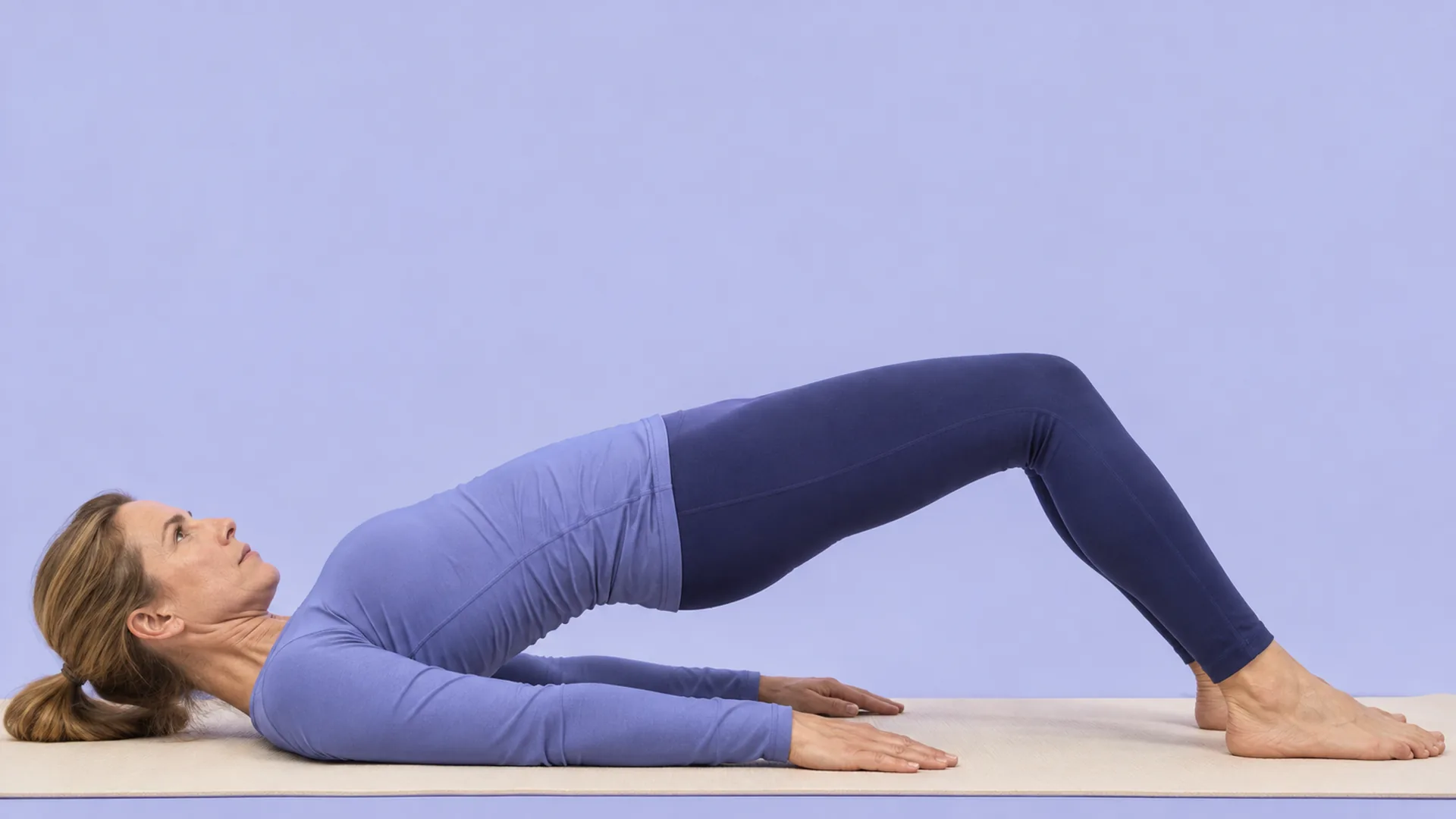
Tendons get stronger when they are loaded gradually. A good programme starts gently and builds over weeks. Something to try three or four times a week:
If you would like to follow along, VIDA has short videos of bridges you can use at your own pace. Later, standing exercises like gentle hip hinges, bending forward from your hips with a soft knee and a straight back, can be added in.
Check how your sitting bone feels later that day and the following morning. A mild ache that settles by the next day is usually fine. If it is sorer, ease back a little rather than stopping.
Once an exercise feels easy, you could add a few repetitions, hold for longer or move your feet further away. Changing one thing at a time, every week or two, gives the tendon time to adapt. Progress can be slow with this kind of tendon pain, so small improvements, like sitting through a meeting more comfortably, are worth noticing.
Walking on flat ground is usually comfortable. Swimming and cycling, with the saddle a little higher, are good options too. If you run, a gradual return, leaving out hills and sprints until your tendon feels strong, tends to work best.
If your pain is not easing after several months of steady strengthening, a physiotherapist can help tailor a plan to you.
Your VIDA pain check-in can help you notice how your tendon responds over time.