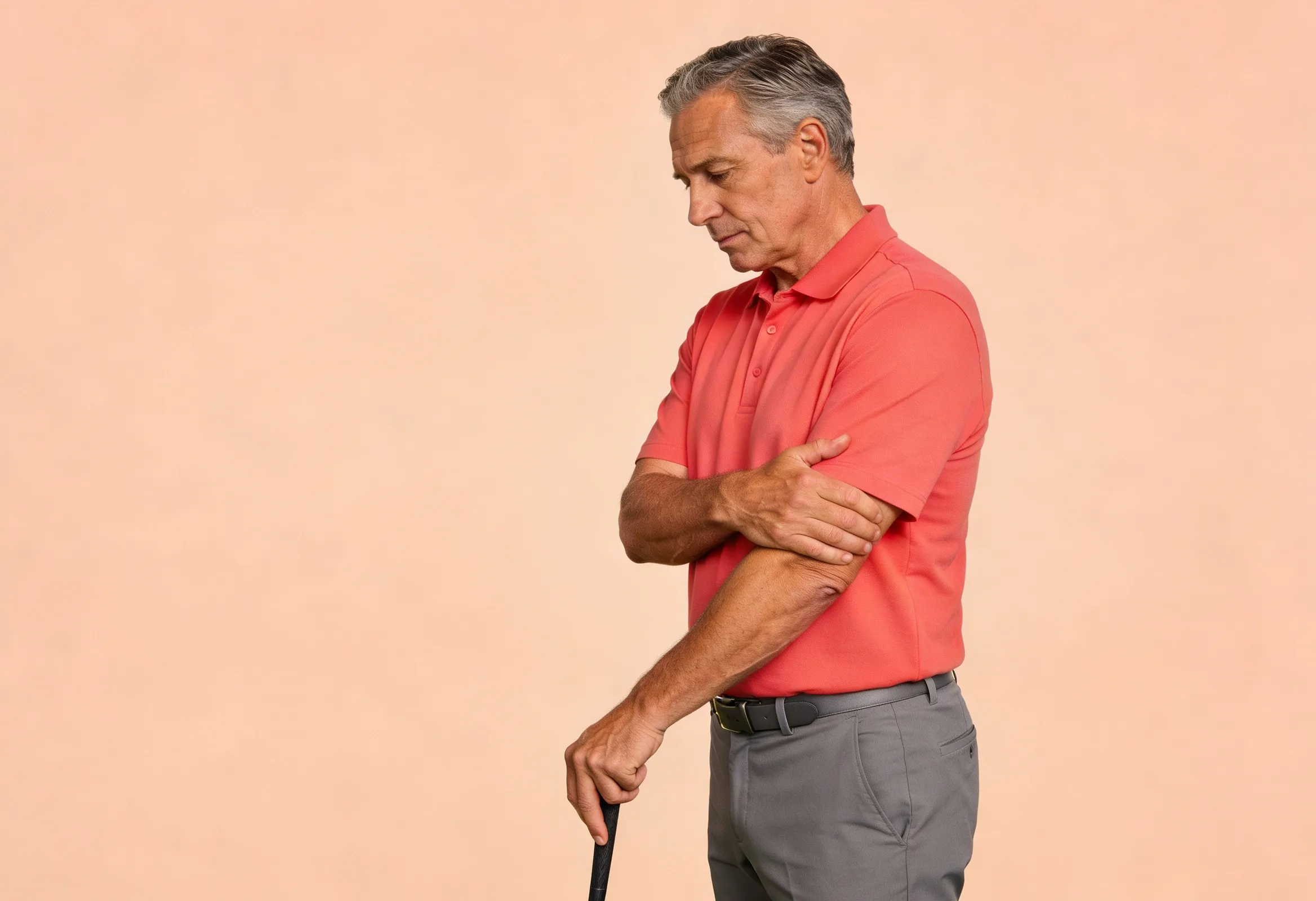
Golf with elbow pain and what actually helps beyond rest

Dr Nicola Tik
Elbow pain is one of the most common complaints among recreational golfers, and one of the most frustrating because it tends to persist if not addressed properly. Rest alone rarely resolves it for long, and many golfers find themselves in a cycle of easing off, returning to play, and having the pain come back. This article looks at what is actually driving elbow pain in golfers and what tends to produce more lasting improvement.
The forearm muscles that control the wrist and grip attach to the elbow via tendons on both the inside and outside of the joint. During the golf swing, those muscles work hard to control the club through the backswing, generate force through impact, and manage the follow-through. The moment of impact, particularly when the club strikes the ground before the ball, transmits a significant jolt through the forearm and into the elbow tendons.
Golfer's elbow, which affects the tendons on the inside of the elbow, is more common in golfers than the lateral elbow pain more associated with tennis. But both can occur in regular golfers depending on swing mechanics and which part of the forearm is most loaded.
The pain typically builds gradually over weeks rather than arriving suddenly, starting as a mild ache after playing and progressing to something more persistent if the load is not adjusted.
Tendons respond to load rather than simply to rest. Complete rest removes the irritating demand temporarily but does not build the tendon's capacity to manage that demand when you return to playing. This is why the cycle of rest and recurrence is so common with elbow tendon pain in golfers.
What tends to produce more lasting improvement is a combination of reducing the aggravating load in the short term and gradually building tendon strength over several weeks. That combination allows the tendon to settle and then progressively develop the resilience it needs to manage the demands of regular golf without breaking down again.
Impact with the turf is one of the most significant contributors to elbow load in golfers. Fat shots, where the club strikes the ground before the ball, transmit considerably more force through the forearm than clean contact. During a period of elbow pain, focusing on clean contact and practising on a mat rather than turf where possible reduces this impact load meaningfully.
Grip pressure is worth examining. Gripping the club too tightly throughout the swing increases the sustained load on the forearm muscles and tendons. A lighter grip pressure, firming only through impact rather than maintained throughout the swing, reduces that load across the full round.
Shaft flex and grip thickness also play a role. A shaft that is too stiff transmits more vibration to the hands and forearms at impact. If elbow pain has developed or worsened after a change in equipment, that connection is worth exploring.
Progressive loading of the forearm tendons through specific strengthening exercises, done consistently over six to eight weeks, builds the capacity the tendon needs to manage golf without recurring pain. This tends to be more effective than rest alone and more sustainable than simply managing symptoms around playing.
If you would like to try a guided exercise for the elbow and forearm, VIDA has a short video you can follow at your own pace.