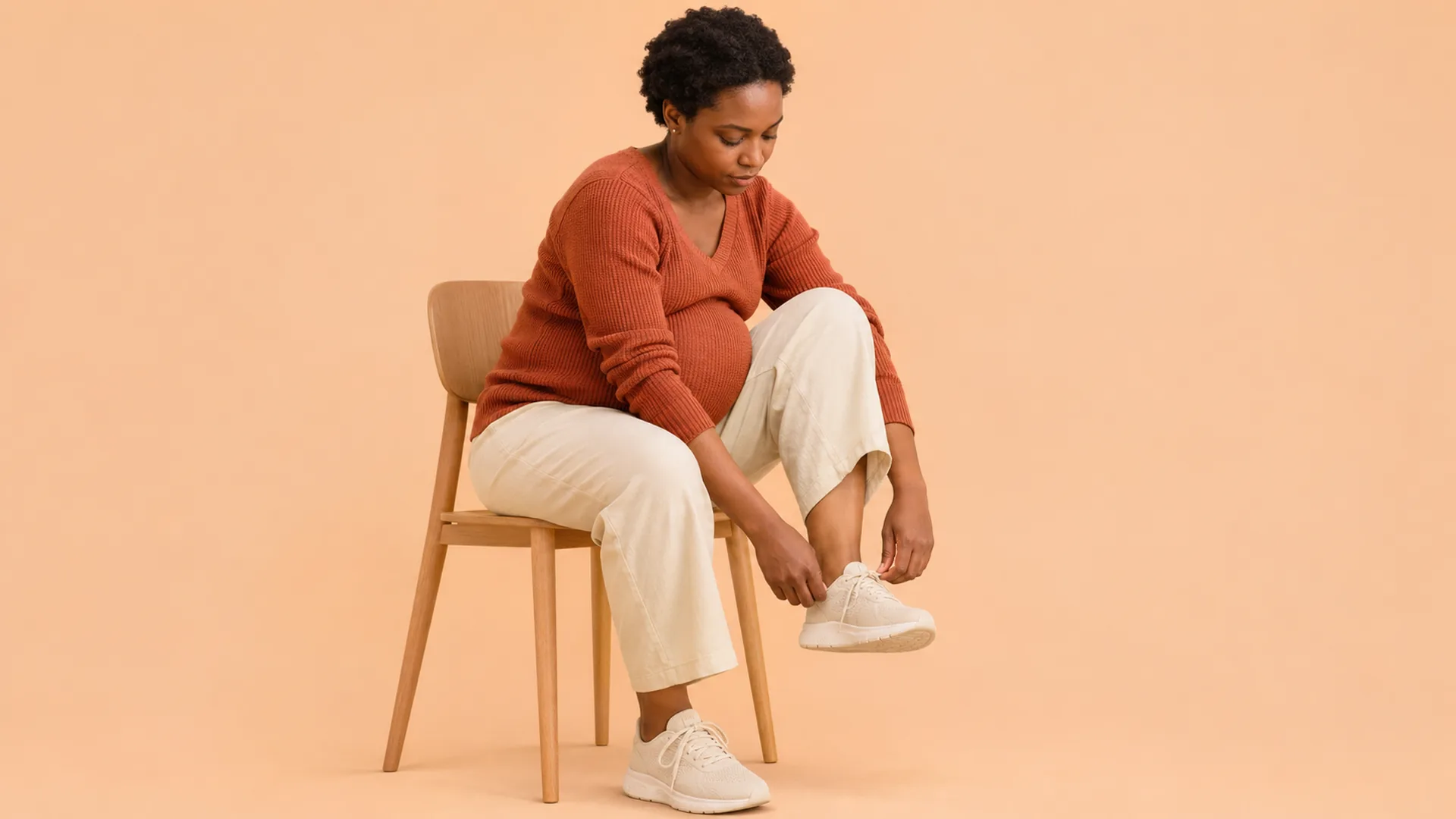
Glute or buttock pain during pregnancy

Dr Nicola Tik
An ache deep in your buttock can make ordinary things, like pulling on trousers or walking to the shops, feel surprisingly awkward. It can turn up before your bump is particularly big, as well as later on. Understanding how your pelvis is changing can help you find easier ways to move through the day.
During pregnancy, your body releases hormones that soften the ligaments around your pelvis, to help make room for your baby. At the same time, your growing bump shifts where your weight is carried. The joints at the back of your pelvis, and the buttock muscles that support them, end up doing more work than usual.
For some people, this shows up as pain in the buttock, the low back or the front of the pelvis. Research suggests around one in five people have this kind of pelvic pain during pregnancy. It can start at any stage, and it is a common part of pregnancy rather than a sign that something is wrong with your baby.
Pelvic pain often flares with movements that put your weight through one leg, or that move your legs apart. A few small changes can help:
These changes reduce the strain on the sore area without stopping you being active.
Choose a chair that supports your back and lets your feet rest flat on the floor. If a hard seat presses on the sore spot, a cushion can make it more comfortable.
Rather than looking for one perfect position to hold all morning, try changing position before the ache builds. A short sit after standing, or a gentle walk after sitting, often suits a sore pelvis better than a long spell of either. VIDA’s Pomodoro stretches, in the top right corner, can remind you to pause and move during focused work.
Lying on your side with a pillow between your knees and ankles keeps your pelvis more level, which many people find eases buttock pain at night. A pillow under your bump can help too. From 28 weeks, settle to sleep on your side for nights and naps. Either side is fine, and if you wake on your back, simply turn back onto your side.
Staying active usually helps pelvic pain more than resting completely. Shorter walks on level ground often feel easier than long outings with hills or lots of stairs. Swimming can feel good too, as the water takes some of your weight, though you could leave out breaststroke if it brings on pain.
Gentle strength work helps the muscles around your pelvis share the load. Something to try a few times a week:
If you would like to follow along, VIDA has a short video of sit to stands you can use at your own pace. If a movement brings on sharp pain, make it smaller or leave it out.
There is no need to force a deep buttock stretch when the area feels tight. The tightness is often the muscles working hard to support your pelvis, and gentle strength tends to help more than pulling into it.
Pelvic pain in pregnancy usually responds well to the right support. If the pain is making it hard to walk, it is worth letting your midwife know, as a pelvic health physiotherapist can tailor a plan to you. Your VIDA pain check-in can help you notice which activities bring it on, which is useful to share.