Getting in and out of your cab more comfortably

Dr Nicola Tik
Climbing in and out of a high cab is one of those things you do so often you stop noticing it, until a knee twinges on the step down or your back catches as you twist out of the seat. A cab sits high and the step is a big drop, so doing it dozens of times a day adds up fast for the knees and lower back. A couple of small changes to how you get down can protect both.
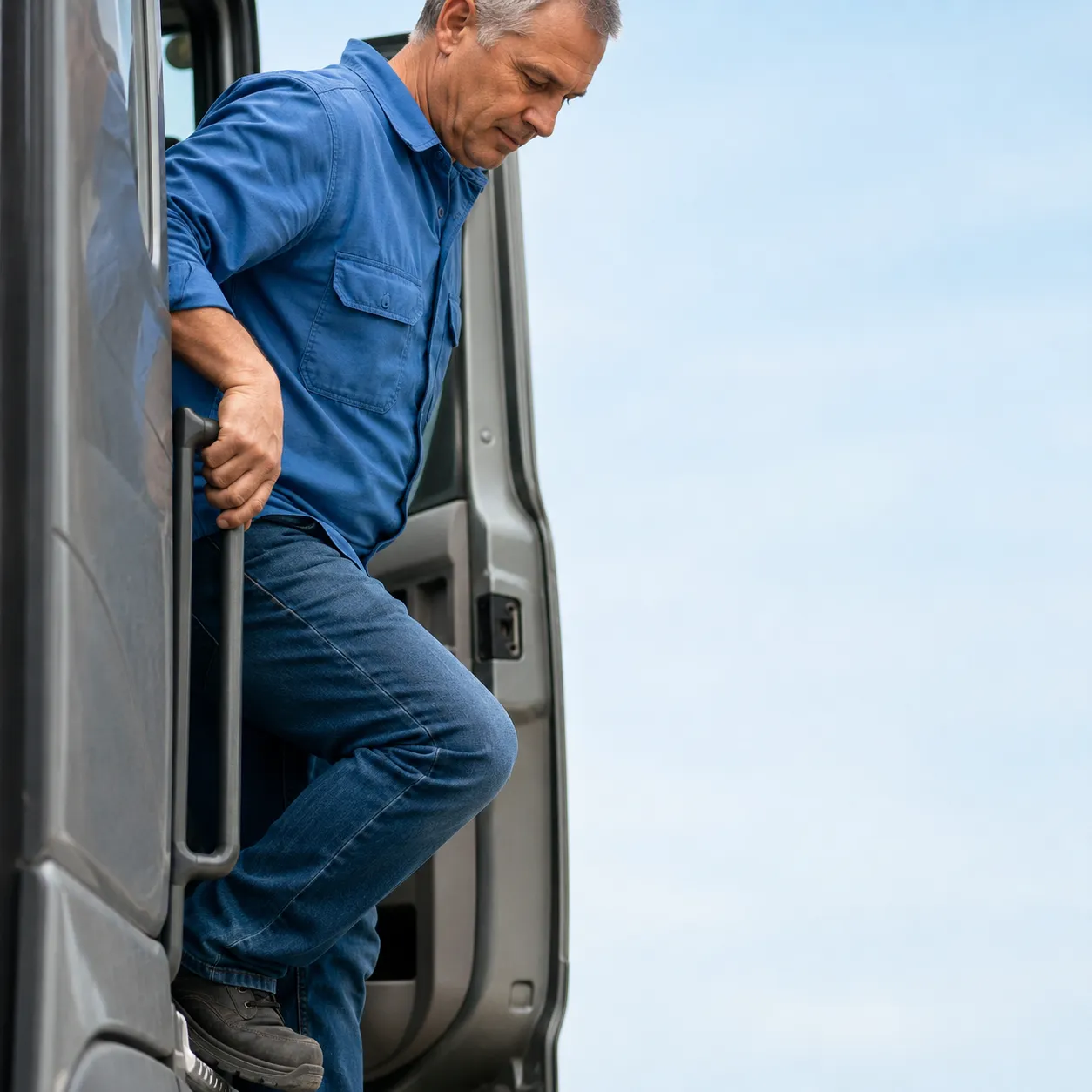
The habit that catches most people out is stepping down forwards, facing away from the cab, which lands all your bodyweight through one knee and jars the back. Turning to face into the cab before you step down, as if coming down a ladder, lets both legs share the effort and keeps the landing softer. It feels unnatural for the first few goes, then quickly becomes second nature. Your knees and back will notice the difference by the end of a busy day.
Three points of contact means always having two hands and one foot, or two feet and one hand, in touch with the cab as you move. Using the grab handles and steps together, rather than jumping or swinging down, means you are never relying on one limb to take everything. It also gives you something solid if a step is wet or your footing slips. Slower and steadier here saves both the sudden jolts that upset the back and the heavy landings that upset the knees.
Jumping from the cab is quick, but the landing sends a big spike of force straight up through the knees, hips and lower back. Doing it once is unlikely to matter, but repeated day after day it wears on the joints. Taking the extra second to step down properly, using the steps and handles, spreads that load out instead of dumping it all in one jolt. If you are tired at the end of a shift, this is exactly when it is worth being deliberate about it.
Twisting to swing both legs out while your back is still bent is a common way to tweak it. Shuffling towards the edge of the seat first, then turning your whole body to face the door before you stand, keeps your back in a stronger position. Placing a hand on the seat or door frame gives you support as you rise. Taking it as two smooth steps, turn then stand, rather than one big twist, is much easier on the lower back.
If your knees or back feel it after a day of climbing in and out, gentle movement usually helps them settle. A short walk, some easy knee bends, or gently easing your back through its range often takes the edge off. Keeping moving through the evening, rather than seizing up in a chair, tends to help too. What works varies from person to person, so it is worth seeing what settles yours.
If you would like to try a guided stretch to wind down after a shift, VIDA has a short video you can follow at your own pace.