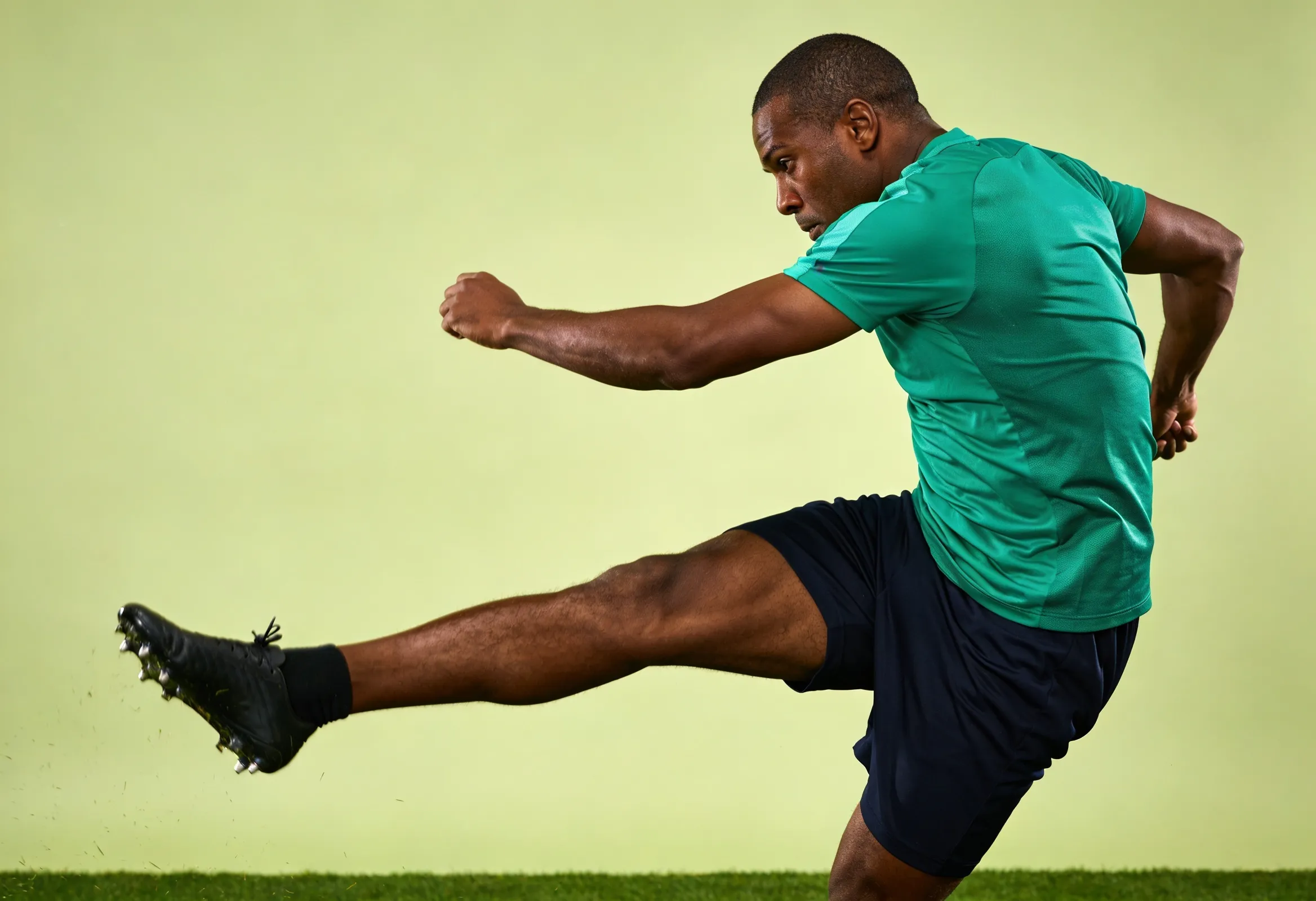
Football with lower back pain and why rotation is often the culprit

Dr Nicola Tik
Lower back pain in recreational football players is more common than most people expect, and it is often not the running or the physical contact that is behind it. The rotational demands of football, kicking, turning, and twisting through the trunk, are what the lower back tends to find most challenging. This article looks at why that is and what tends to help.
Almost every technical action in football involves rotation through the trunk and lower back. Kicking requires the body to rotate rapidly and forcefully through the spine to generate power. Turning to receive a pass, shielding the ball, and changing direction all involve the lower back managing rotational and lateral load repeatedly throughout a match.
The lower back is designed to manage some rotation, but it is less well equipped for it than the hips and thoracic spine higher up the back. When the hips or the mid-back are stiff or not contributing their share of rotational movement, the lower back tends to compensate by rotating more than it comfortably should. Over the course of a match, and over a season, that compensation adds up.
Kicking, particularly powerful kicking with full follow-through, is often the movement that loads the lower back most in football. The combination of rapid rotation, extension, and force production through the trunk makes it one of the most demanding actions for the lower back.
Fatigue through a match is a significant factor here too. The muscles of the trunk and lower back work hard throughout a game to stabilise the spine during all the movements football involves. As they tire, the lower back tends to absorb more load and is more vulnerable to the rotational demands of the game in the latter stages of a match.
Playing on hard or uneven surfaces also tends to increase lower back discomfort because every stride transmits more impact through the spine.
Being more conservative with powerful kicking during a period of lower back pain is a practical adjustment. Choosing shorter, more controlled passes over full-power shots reduces the rotational demand on the lower back without removing you from the game. Avoiding twisting under pressure when there is a more straightforward option available is another small in-game choice that reduces unnecessary load.
Warming up the trunk and hips thoroughly before a match, with some gentle rotational movement and hip mobility work, helps prepare the lower back for the rotational demands ahead rather than going into them cold.
Giving the lower back adequate recovery time after a match is particularly important for recreational players. The trunk muscles often carry significant fatigue after a full game, and training intensively in the days immediately after a match without allowing recovery tends to be when lower back pain worsens most.
Two things consistently make a difference to lower back pain in football players. The first is trunk endurance, the ability of the muscles around the spine to maintain stability throughout a match rather than fatiguing early. The second is hip mobility, which allows the hips to contribute their share of rotational movement and reduces the demand placed on the lower back to compensate.
Simple trunk endurance exercises, such as planks and bird dogs done consistently between matches, and regular hip mobility work build both of these qualities over several weeks and tend to make a meaningful difference to how the lower back copes with football over a season.
If you would like to try a guided exercise for the lower back and trunk, VIDA has a short video you can follow at your own pace.