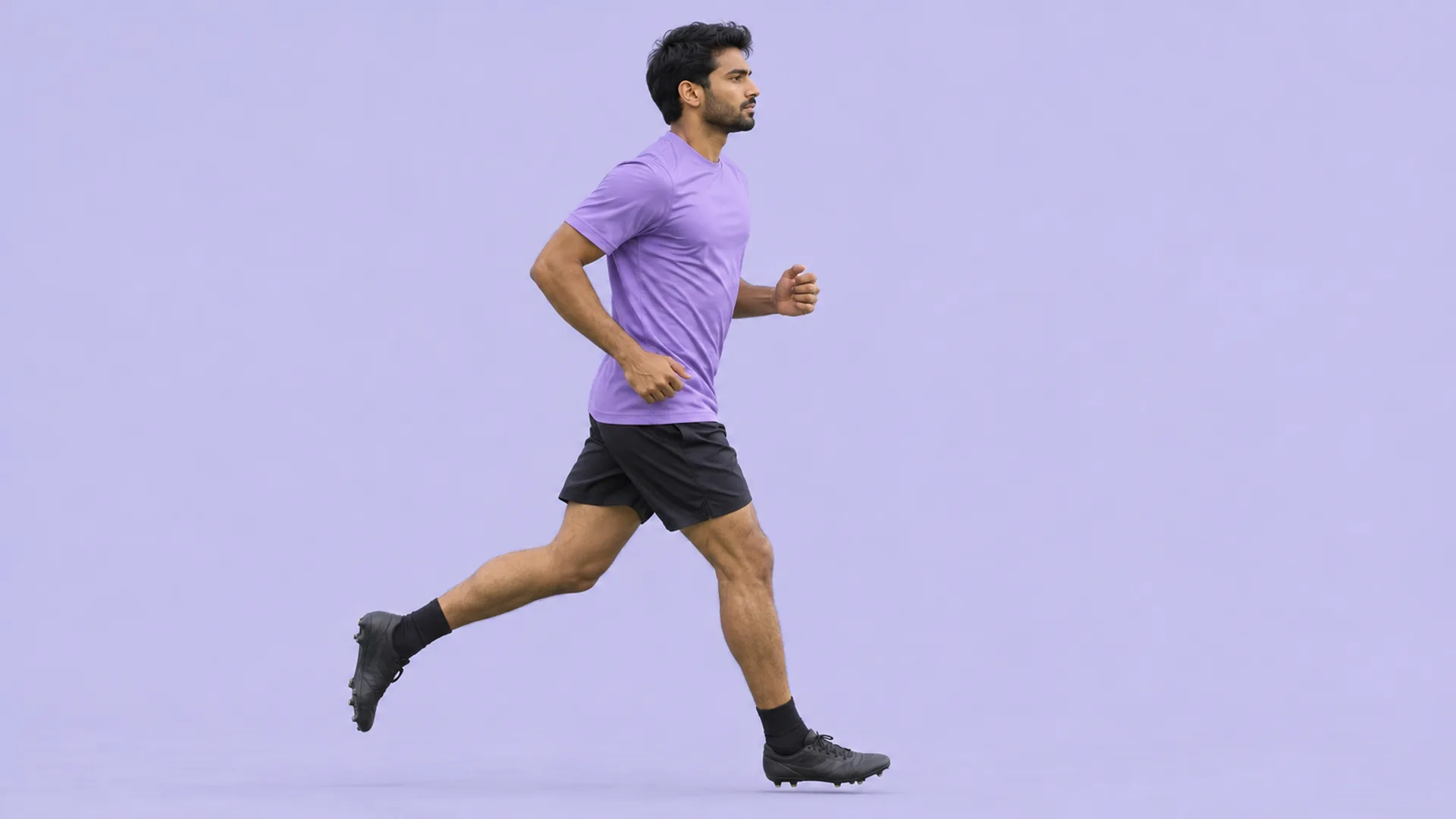
Football with hamstring pain and a steady return to sprinting

Dr Nicola Tik
Your hamstring, the muscle at the back of your thigh, has started aching, maybe after a sprint, a long pass or a stretch for the ball. Hamstring problems are among the most common in football, and they can be frustrating when they keep coming back. A steady, staged return, and building hamstring strength through the season, can help you get back to sprinting with more confidence.
Sprinting asks your hamstrings to work hard as they slow your leg down just before your foot hits the ground. Long passes, shots and stretching for the ball lengthen the hamstring quickly. Tiredness late in a match, or a jump in training load, can add to the risk.
Many hamstring problems come on suddenly, as a sharp pull during a sprint. Some build gradually, as a deep ache near the sitting bone. In most cases, the area is irritated or strained rather than badly damaged.
After a sudden pull, gentle movement tends to help more than complete rest. Walking at a comfortable pace, gentle bridges and easy cycling can keep the area moving. Avoid stretching the hamstring hard for now.
Returning to sprinting too quickly is one of the most common reasons hamstring problems come back. A staged return tends to work well:
Move to the next stage when the last one feels comfortable and your hamstring settles by the next morning.
Building hamstring strength helps your return and can help protect you through the season. Research has found that adding the Nordic hamstring exercise to regular training was linked with around half as many hamstring injuries.
Something to try, building up in stages:
Nordic curls are demanding, so start with a few slow reps once a week, and build gradually. Keeping them going once or twice a week through the season, rather than stopping once you are back, is where the benefit tends to come from.
If you would like to follow along, VIDA has short videos of bridges and lunges you can use at your own pace.
A simple guide:
If these are not holding, step back to the previous stage rather than stopping.
A thorough warm-up helps your hamstrings feel ready for sprinting. Something to try:
Tiredness late in matches can make hamstrings more vulnerable. Building your running fitness gradually, and playing part of a match when you first return, can help.
You should get it checked by a GP or physiotherapist if you felt a sudden sharp pain or a pop at the back of your thigh with bruising, if you cannot walk normally, or if the pain is high up near your sitting bone after a sudden injury.
A sudden pull often settles over a few weeks with a staged return. Pain near the sitting bone that has been around for a while usually improves over months rather than weeks. Your VIDA pain check-in is a good way to keep track of how your hamstring responds.