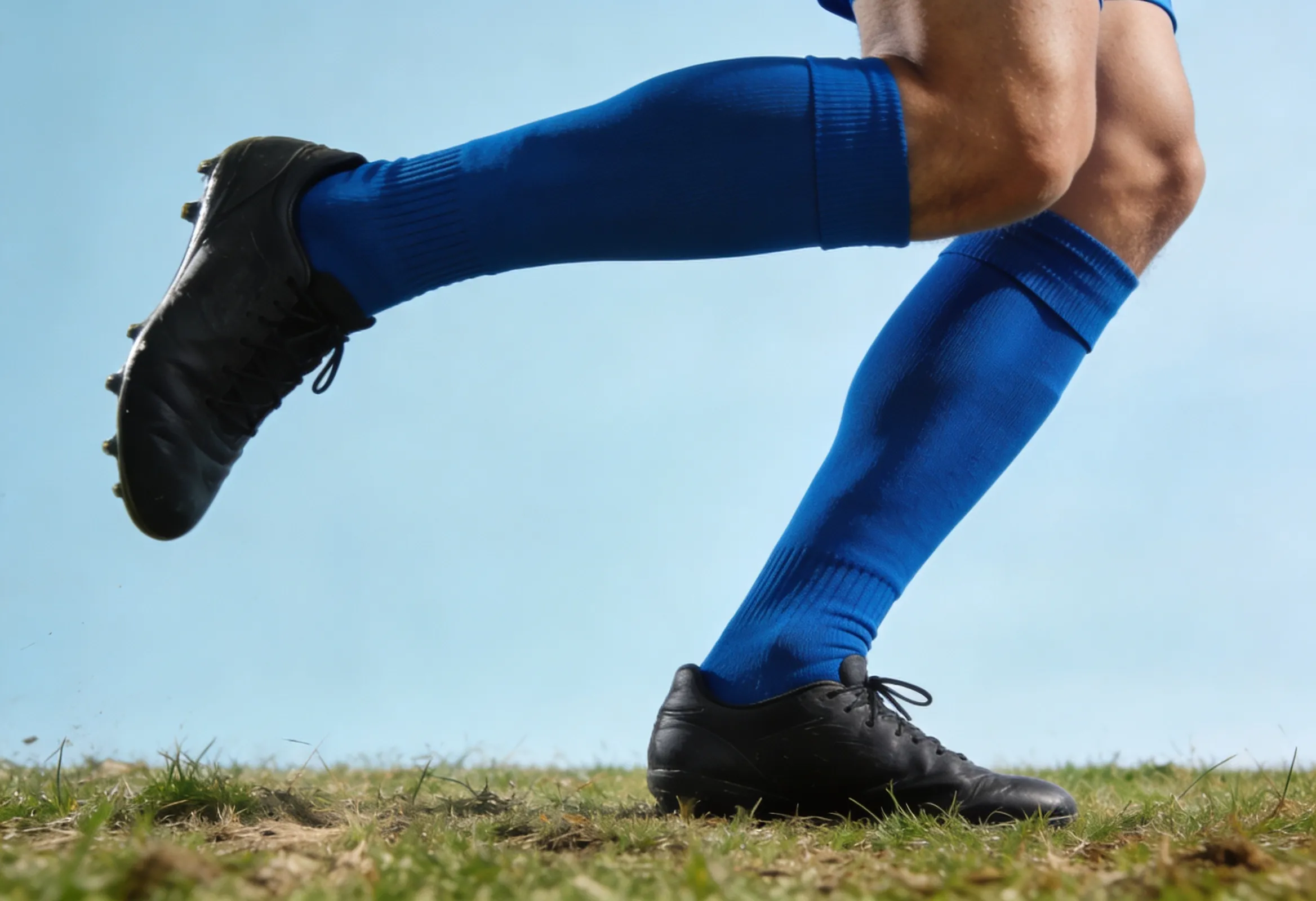
Football with ankle pain and what recovery actually looks like

Dr Nicola Tik
Ankle pain is something most recreational football players encounter at some point. Whether it comes from a sprain, a knock, or a more gradual build-up of load, the ankle has a way of making its presence felt during football in a way that is hard to ignore. This article looks at what tends to happen with the ankle in football and what genuine recovery looks like for someone who wants to keep playing.
The ankle is the most frequently injured joint in football at every level. The combination of uneven surfaces, contact, rapid changes of direction, and the sheer volume of load it manages during a match makes it vulnerable. Every stride, turn, and landing passes through the ankle, and over the course of a match that adds up to an enormous amount of repeated demand.
Ankle sprains are the most common acute injury in recreational football, typically involving the ligaments on the outside of the ankle when the foot rolls inward. But gradual load-related ankle pain, in the tendons, the joint itself, or the structures around it, is also common and often less straightforward to manage because there is no single incident to point to.
One of the most common mistakes with ankle pain in recreational football is returning to play too quickly. The ankle may feel significantly better within a few days of a sprain or flare-up, but the underlying structures often need considerably longer to recover their full capacity. Returning to the demands of football before that has happened is one of the most consistent patterns behind recurring ankle problems.
Genuine recovery involves a gradual return to load rather than going from rest to a full match. Walking comfortably, then jogging, then running at pace, then changing direction, then the full demands of a match, each stage needs to feel solid before moving to the next. Skipping stages because the ankle feels okay at rest tends to be where problems recur.
Swelling and stiffness after a match or training are useful signals. Some response is normal, but significant swelling or stiffness that takes more than a day or two to settle suggests the load was more than the ankle was ready for.
Upper body and core training can be maintained fully during most ankle recovery periods, which keeps overall fitness from declining significantly. Low-impact activity like cycling or swimming maintains cardiovascular fitness without loading the ankle in the same way as running and football.
When returning to football, starting with less demanding roles that involve less sprinting, cutting, and pivoting gives the ankle a graduated return to match demands rather than going straight back to full intensity.
Calf strength and ankle stability are the two most consistently supported factors in ankle resilience for football players. Strong calves absorb load more effectively, and better ankle stability reduces the likelihood of the joint rolling under the demands of direction changes and uneven surfaces.
Single-leg balance work and calf strengthening done consistently between matches builds meaningful resilience in these areas over several weeks. Many players find that this kind of regular work between matches significantly reduces how often ankle problems recur.
If you would like to try a guided exercise for the ankle and calf, VIDA has a short video you can follow at your own pace.