Foot or ankle pain in pregnancy

Dr Nicola Tik
By the end of the day, your shoes feel tighter and your ankles have lost their usual shape. Swelling and aching feet can make standing, walking and even getting comfortable on the sofa harder. Giving your feet more room, more rest and more movement can help them through the day.
Pregnancy increases the amount of fluid your body holds. As your baby grows, the extra pressure can also make it harder for blood to return from your legs, so fluid tends to collect around your feet and ankles. Swelling like this is very common, affecting most pregnant people at some point, and it usually builds gradually through the day and is worse in warm weather.
Your feet carry more weight as pregnancy goes on, and hormones that soften ligaments can affect your feet too. Some people notice their arches feel flatter or their shoe size changes.
Gradual swelling that builds through the day and eases overnight is common. A sudden increase in swelling, especially in your face, hands or feet, is different. You should contact your midwife or maternity team straight away if you notice this, rather than trying to manage it with rest alone.
Pain does not always come from swelling. If one part of your foot stays sore even when the swelling eases, it is worth mentioning the pattern to your midwife.
Shoes with enough width and depth for your toes and the top of your foot can make a big difference. Adjustable fastenings, like laces or straps, help when your feet change size through the day, and a secure heel stops the shoe slipping without you gripping with your toes.
A supportive, cushioned sole often feels better than squeezing into shoes that fitted earlier in pregnancy. If a strap leaves a deep mark, loosen it or try another pair. Indoors, a cushioned slipper or shoe may feel kinder than walking barefoot on a hard floor.
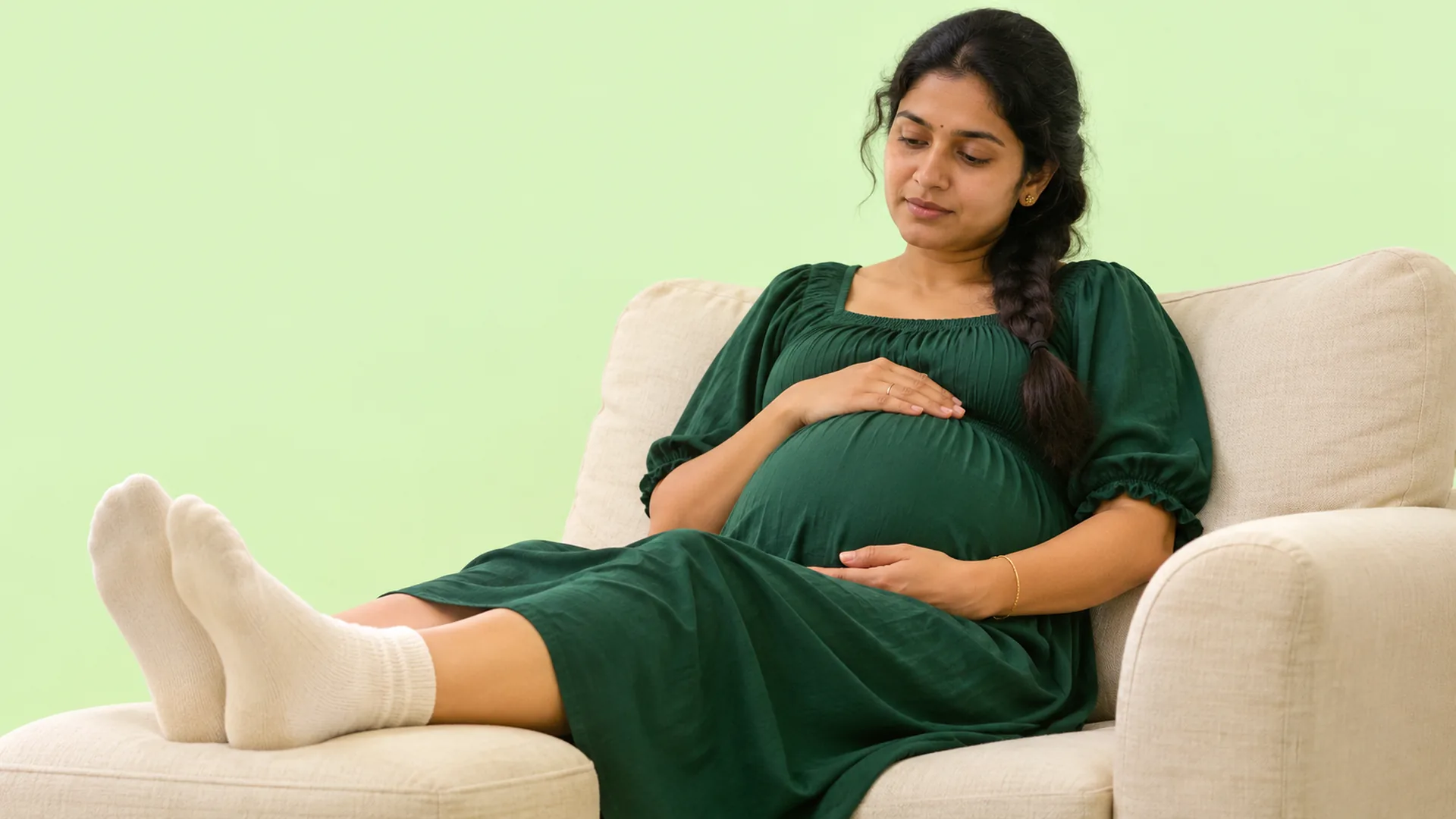
When you sit, resting your legs on a stool or cushions can help fluid move back up from your feet. Make sure nothing hard is pressing behind your knees.
Moving your ankles helps your calf muscles pump fluid back towards your heart. Something to try a few times a day while sitting:
If you would like to follow along, VIDA has a short video of heel raises you can use at your own pace.
Standing still for long spells tends to make swelling and aching worse. A short walk followed by a sit often feels better than staying in one place. If you spend much of your day on your feet, you could look for tasks you can do sitting down, or ask about adding short seated breaks. At home, a stool for food preparation can take some pressure off tired feet.
Rests work best when you take them before your feet become very sore. VIDA’s Pomodoro stretches, in the top right corner, can remind you to change position during focused work.
Lying on your left side at night can help blood flow back from your legs. A pillow under your feet, or between your knees, can make you more comfortable. Drinking enough water through the day may also help, even though it can seem the opposite of what you need. A short, gentle walk in the evening, rather than a long spell on the sofa, can help ease swelling before bed.
Your VIDA pain check-in can help you notice which parts of the day are most demanding for your feet.