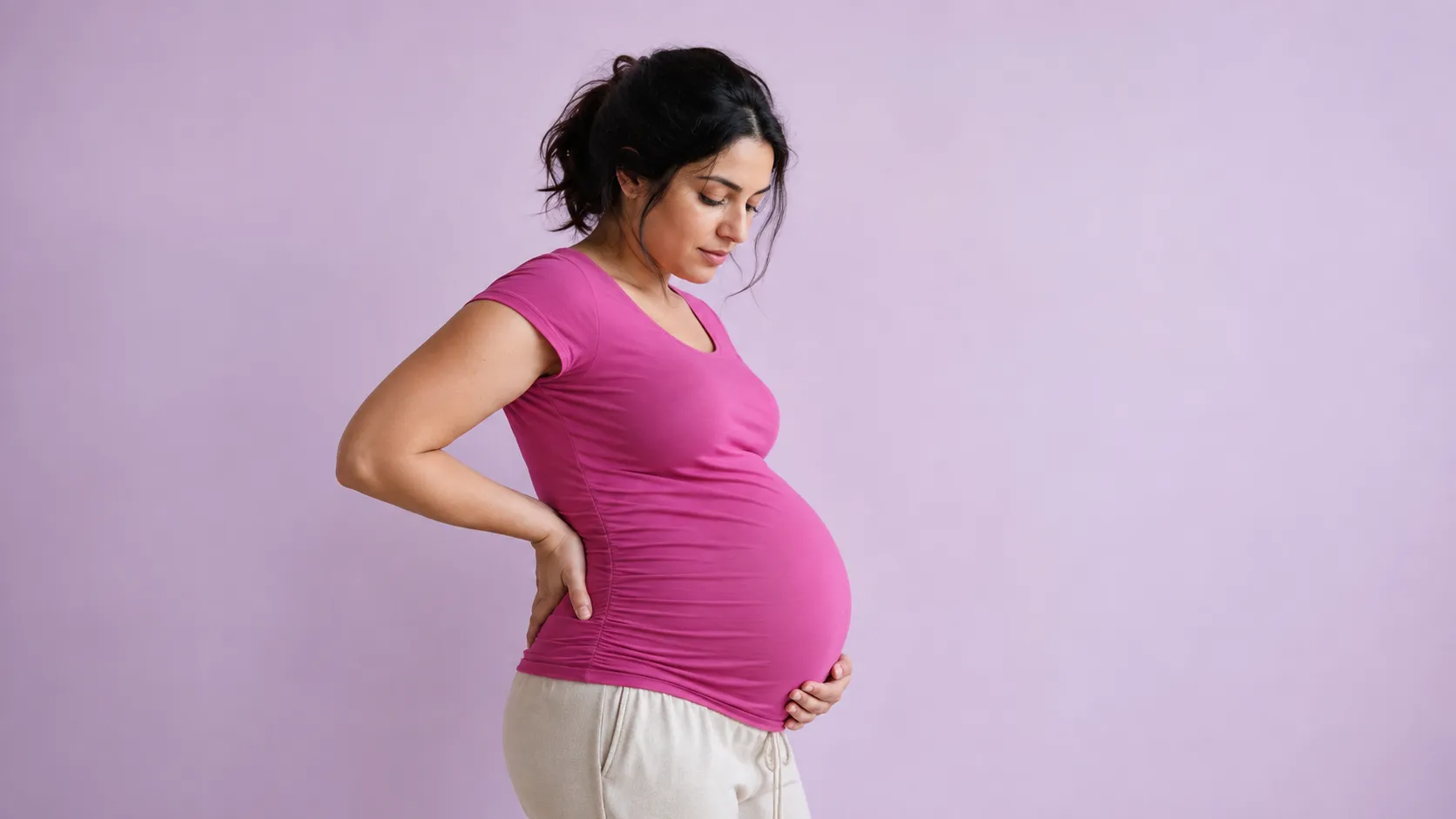
Easing hip and glute pain in late pregnancy

Nicola Tik
As your body makes room in these final weeks, aches often settle into the hips and glutes, the muscles across your bottom and the sides of your hips. It can make walking, turning over in bed and getting comfortable feel like hard work. This is a very common part of late pregnancy, and while it can be wearing, there are comfortable positions and gentle movements that take some of the pressure off.
Two things are happening at once. Your growing bump shifts your weight forward and changes how you stand and move, and pregnancy hormones naturally soften the ligaments around your pelvis to prepare for birth. Together, that means the joints and muscles around your hips are working differently and carrying more, which they let you know about. It is your body adapting, not a sign anything is wrong.
How you lie down makes a real difference. Resting on your side with a pillow between your knees helps keep your hips level and takes the strain off the joints, and a pillow supporting your bump can ease things further. When you sleep, keeping your knees and ankles roughly in line rather than letting your top leg drop across can help. Finding a set-up that keeps your hips evenly supported often makes nights more comfortable.
Keeping things moving gently helps, as long as you are kind to your hips. Slow, gentle movements like an easy rocking of your pelvis on all fours, or slow marching on the spot, can ease stiffness. It helps to keep movements even and symmetrical, so try to avoid standing on one leg, and sit down to dress or put shoes on rather than balancing. Small everyday adjustments like these lower the uneven load your pelvis is coping with.
A few daily tweaks add up. Keeping your feet closer together when getting in and out of the car or bed, and swinging both legs round together, keeps your pelvis more stable. Shorter walks more often can be easier than one long one, and pausing to rest before you are completely sore helps you avoid the worst of it. Warmth over a sore hip can be soothing too.
Hip and pelvic pain in pregnancy is common and there is support available, so if it is making walking or daily movement difficult, it is worth mentioning to your midwife, who can point you towards help such as a physiotherapist. There is no need to simply put up with it.
Hip and glute pain is a common companion to late pregnancy, and it usually eases once your body is no longer carrying the bump. Keeping your hips evenly supported and moving gently helps you stay as comfortable as possible through these last weeks.