Easing glute and hamstring aches on long drives

Dr Nicola Tik
Long drives have a way of leaving you numb and achy through the backs of the hips and thighs, the deep, dull kind of ache that comes from sitting in one shape for hours. The muscles there are not being worked, they are being squashed and left still, and both add up on a long run. A few habits can keep the blood moving and the ache at bay.
Your glutes and hamstrings are big, powerful muscles that are built to move, and on a long drive they do almost nothing for hours. Sitting compresses them against the seat and slows the blood flowing through, which is what leaves them stiff, tingly or achy. It is not a sign anything is wrong, it is just what happens when strong muscles are held still and squashed. Knowing that, the fix is less about the perfect seat and more about breaking up the stillness.
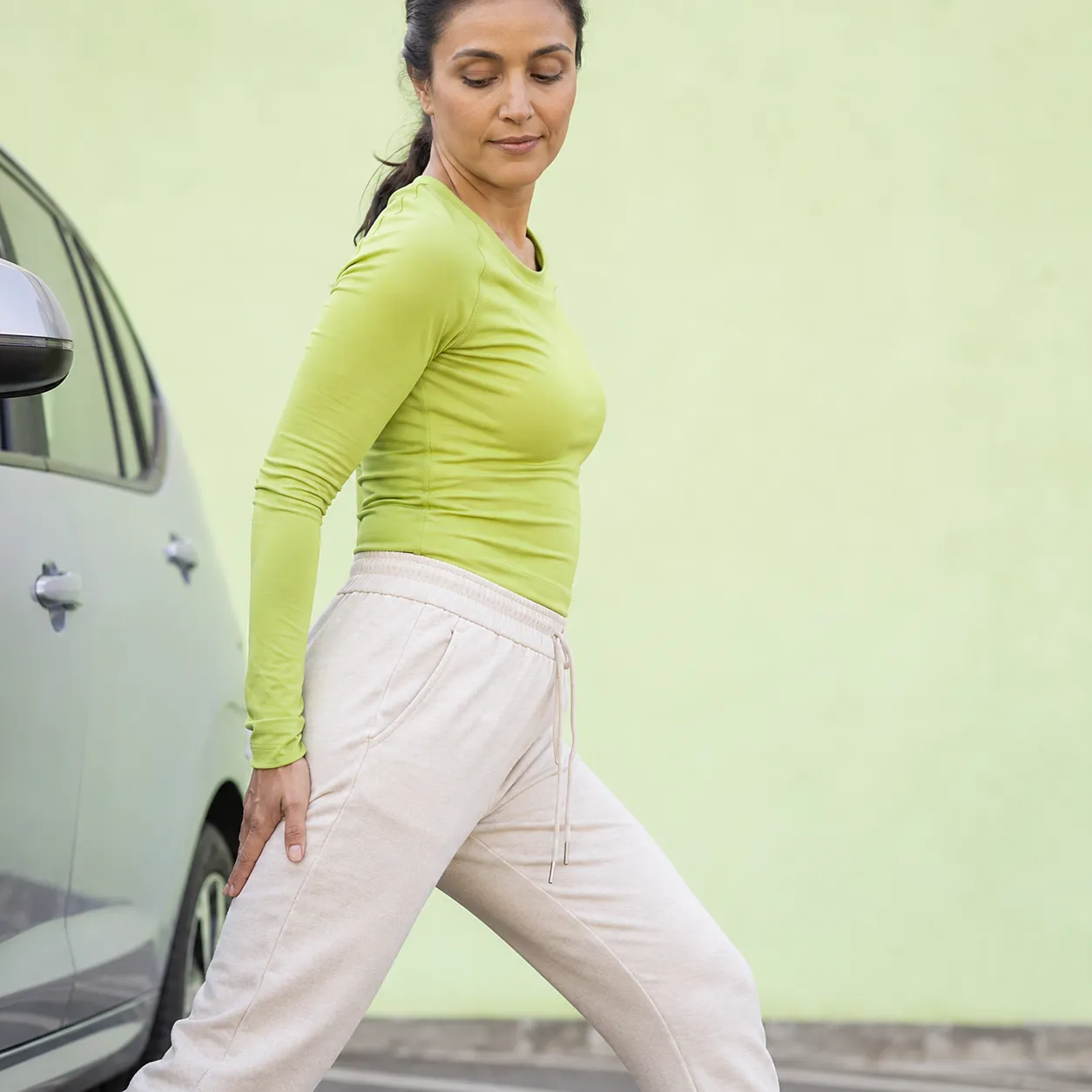
Small, frequent breaks do more for these muscles than one long stop at the end. Where it is safe and legal, pulling over every couple of hours to stand, walk a few steps and gently swing each leg gets the blood moving again quickly. Even a couple of minutes resets things. Standing tall and squeezing your glutes a few times, or a gentle stretch reaching for your toes, wakes up exactly the muscles that have gone quiet. Little and often is the pattern that works.
You do not have to wait for a break to move. Easing your weight from one side of your seat to the other every so often, or gently rocking your pelvis at a red light, changes which spots are taking the pressure. Small tweaks to the seat angle through a long journey also share the load around rather than parking it in one place. The aim is variety, so no single patch of muscle is squashed for the whole drive.
Because the ache is partly about blood flow, anything that keeps circulation moving helps. Gentle ankle pumps and toe wiggles while you are stopped, or a short brisk walk at a break, all get things flowing to the legs. Staying reasonably hydrated and not letting the cab get too warm and drowsy helps as well. These are little things, but on a long drive they add up to noticeably fresher legs at the other end.
If the backs of your hips and thighs feel it once you are out, gentle movement usually settles them faster than sitting straight back down. A walk, some easy leg swings, or a gentle hamstring and glute stretch help many people. A little warmth, like a bath, can be soothing too. What helps varies from person to person, so it is worth finding your own way to unwind after a long run.
If you would like to try a guided glute and hamstring stretch, VIDA has a short video you can follow at your own pace.