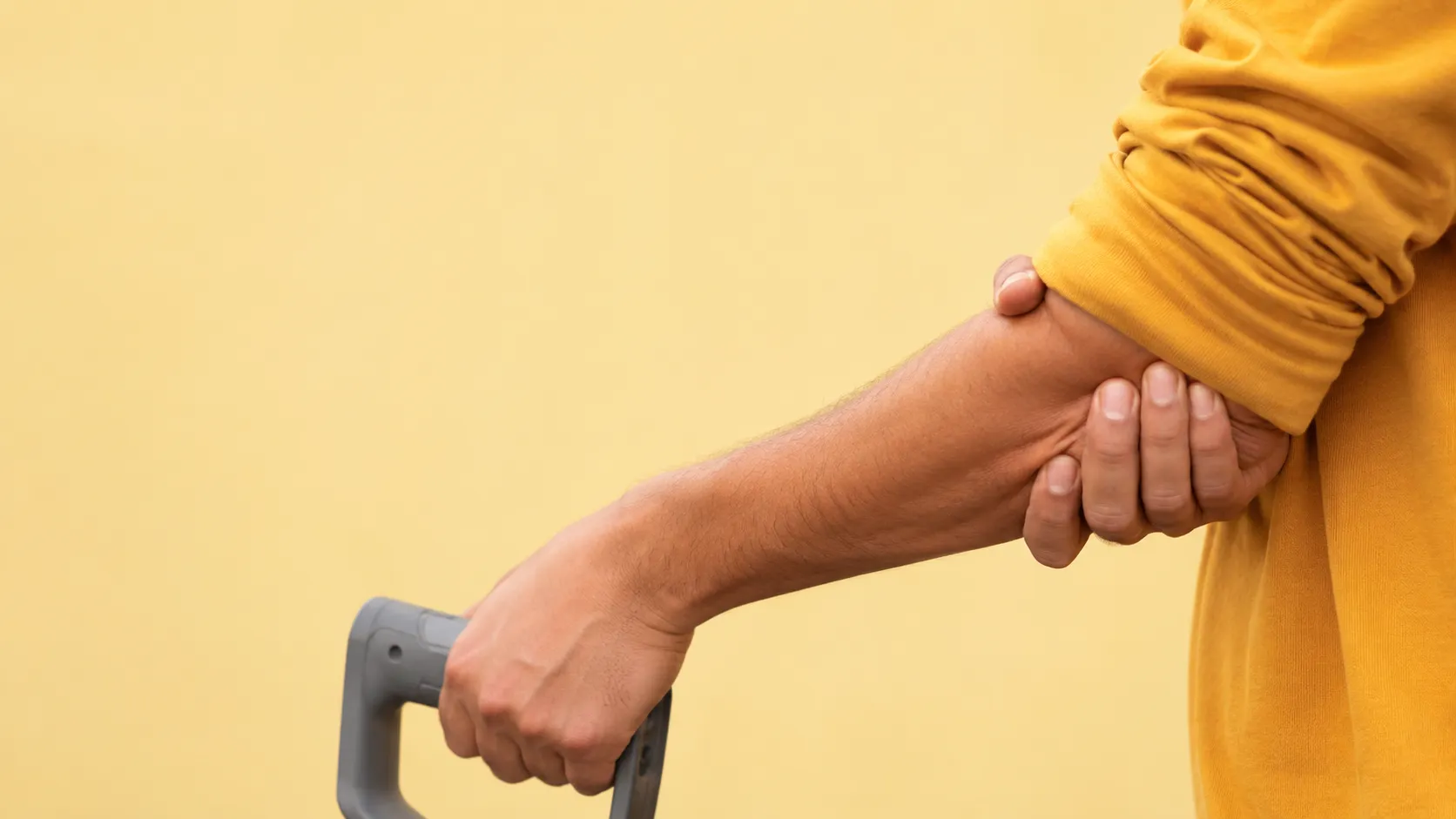
Easing elbow pain from forceful gripping

Dr Nicola Tik
Elbow pain from gripping can seem to come from nowhere, since you are using your hands, not your elbow. The muscles that do the gripping actually start up at the elbow, and their tendons anchor right where the soreness sits, so gripping hard and often can overload them. Easing what those muscles are asked to do usually settles the elbow down.
Because the ache lives where the gripping muscles attach, grip force is the first thing to look at. Squeezing harder than the task needs, out of habit or haste, keeps a constant strain running up to the elbow. Using just enough force to do the job, and relaxing your hand between efforts, gives those tendons regular rest. A quick self-check helps, if your forearm feels rock hard and your knuckles are pale, you are likely gripping harder than you need to.
The right tool means your hand and elbow do far less. Sharp, well-maintained tools cut and turn with less effort than blunt or worn ones. Handles that fit your hand, neither too thick nor too thin, and let your wrist stay straight, reduce how hard you have to clamp down. For heavy or repetitive gripping, powered or spring-loaded tools take the force off your arm altogether. Trying a few options to find what suits your hand is time well spent for a sore elbow.
Doing the same forceful grip over and over gives the elbow tendons no let-up. Where you can, alternating hands, swapping between different tasks, or building short pauses into repetitive work lets them recover along the way. Bracing heavier efforts closer to your body, and letting your shoulder and upper arm share the work, means the elbow is not carrying it alone. Variety through the day is one of the kindest things for an overloaded elbow.
Tendons at the elbow settle with rest as much as anything. On a day the elbow is sore, going easy on other heavy gripping, like carrying bags by the handles or wringing things out, lets it calm down. Gentle movement and a little warmth around the forearm often feel soothing. Recovery can take a bit of patience, so easing the load over several days tends to work better than pushing through and hoping it clears on its own.
If your elbow aches after a day of forceful gripping, gentle movement and rest for the forearm usually help. Slowly bending and straightening the arm, easy wrist movements, or warmth around the forearm settle things for many people. What helps varies from person to person, so it is worth seeing what eases yours. Giving it lighter days when it flares tends to help it recover.
If you would like to try a guided forearm stretch, VIDA has a short video you can follow at your own pace.