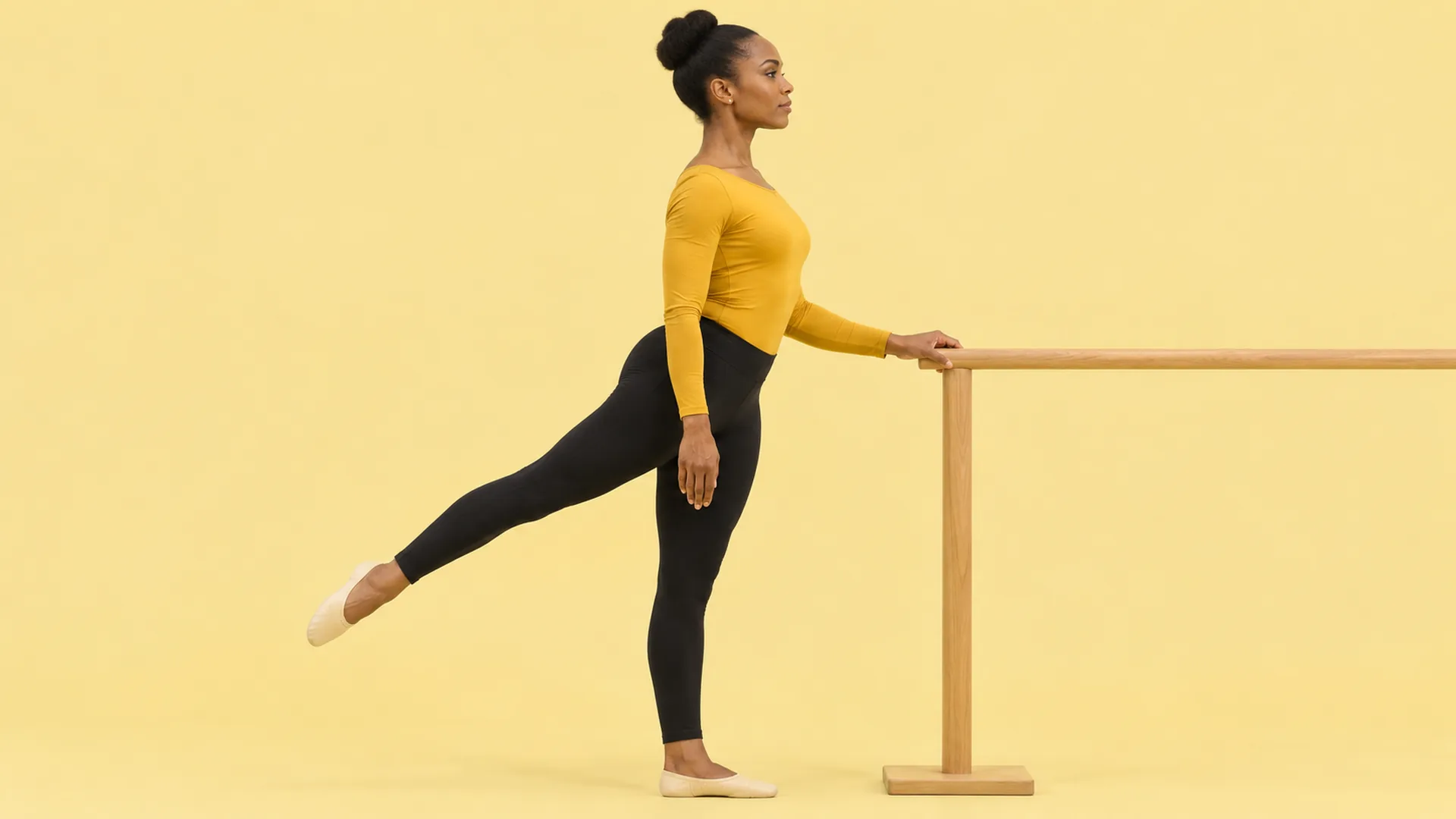
Dancing with hamstring pain and balancing flexibility with strength

Dr Nicola Tik
Your hamstring, the muscle at the back of your thigh, has started aching, and high kicks, splits or extensions now come with a twinge. Dancers often work hard on hamstring flexibility, so it can feel strange that stretching is not making it better. Balancing flexibility with strength can help your hamstring cope with everything dance asks of it.
Dance asks your hamstrings to stretch a long way, often at speed. High kicks, battements and grand jetés lengthen the hamstring quickly. Splits and deep stretches hold it at its longest. Landing from jumps also asks the hamstrings to work hard.
Pain can come on suddenly, like a sharp pull during a kick or split, or build gradually as a deep ache near the sitting bone. In most cases, the area is irritated rather than badly damaged.
Being flexible does not always mean your hamstrings are strong at long lengths. A hamstring that can stretch a long way but is not strong in that position may be more likely to get irritated during fast, high movements.
For pain near the sitting bone, deep stretching can press the tendon against the bone and keep it irritated. Many dancers find their pain eases when they stretch less and strengthen more for a while.
Some ideas:
Much of your dancing can carry on:
Something to try two or three times a week:
As these feel easier, you can add strength work at longer lengths, like slow single-leg Romanian deadlifts with a soft knee.
If you would like to follow along, VIDA has short videos of bridges and lunges you can use at your own pace.
If you go to a class, letting your teacher know means they can suggest alternatives. Marking a movement, doing a smaller version, keeps you learning the routine while your hamstring settles.
If pain is near your sitting bone, sitting on hard surfaces or with your legs crossed can make it worse. Sitting on a cushion and getting up every 30 minutes or so can help. Sitting on the floor with straight legs during class breaks may also bother it, so a chair or bent knees may feel better.
A mild ache during or after dancing that settles within an hour or so is usually fine. If your hamstring is sorer the next morning, ease back next session.
A thorough warm-up helps your hamstrings feel ready before kicks and jumps. Something to try:
As your hamstring settles, you can gradually bring back higher kicks, splits and jumps, one at a time. If your pain has been around for a while, especially near the sitting bone, this usually happens over months rather than weeks. Your VIDA pain check-in is a good way to keep track of how your hamstring responds.