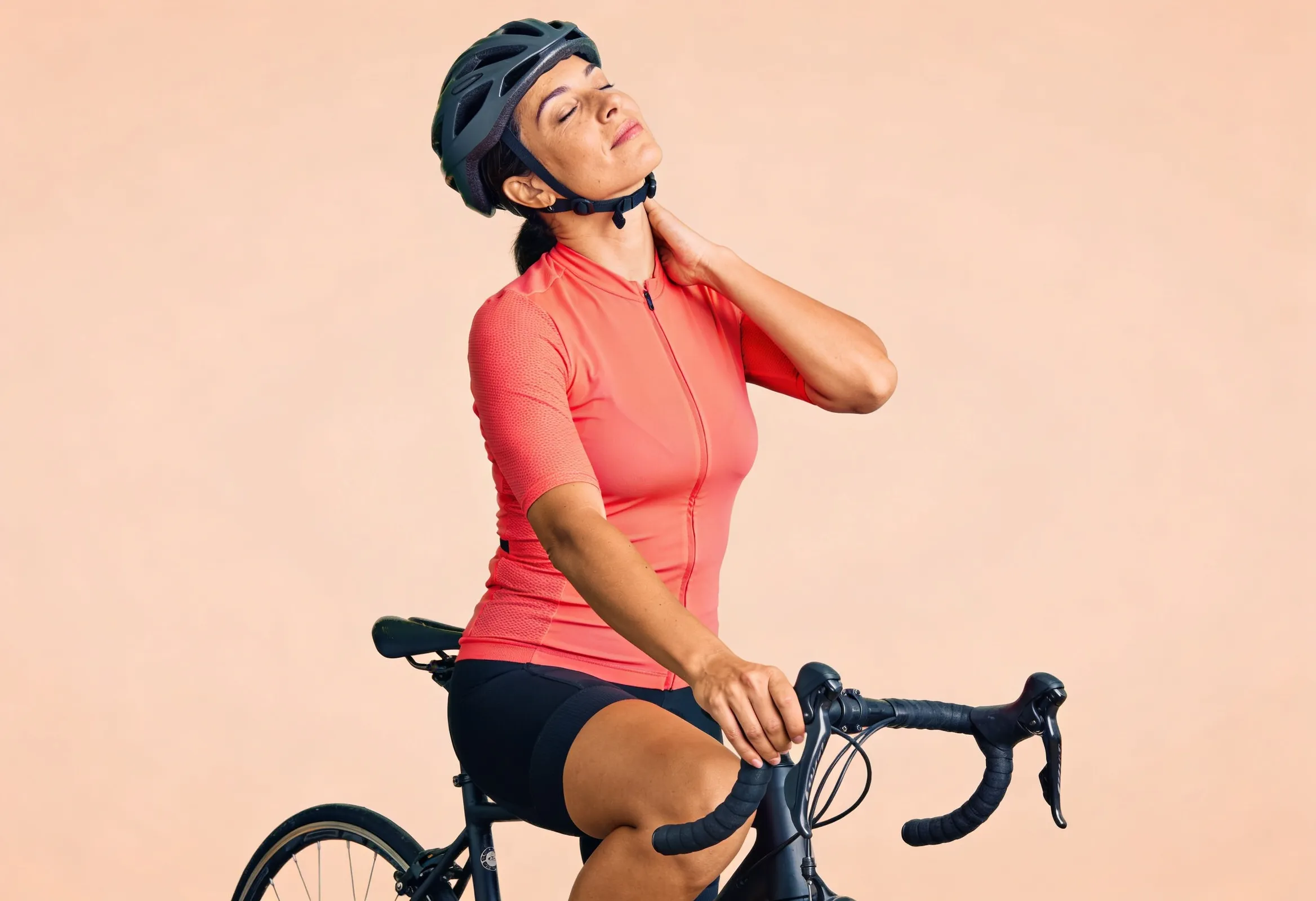
Cycling with neck pain and how to reduce strain on longer rides

Dr Nicola Tik
Neck pain on the bike tends to build gradually. It is often fine for the first part of a ride and then starts to make itself known as the distance increases. This article looks at why that happens and what tends to help, both on and off the bike.
When you are riding in a forward-leaning position, the neck is extended upwards so that you can see ahead. Holding that position continuously, particularly over longer rides, asks a lot of the muscles at the back of the neck and upper back. As those muscles fatigue, the neck can start to feel sore, stiff, or harder to move comfortably.
The more forward-leaning the riding position, the greater the demand on the neck. A lower, more stretched out position requires more neck extension to maintain a clear line of sight, which increases the sustained load on the muscles and joints at the back of the neck.
The height and proximity of the handlebars relative to the saddle is the most relevant position variable for neck pain. A setup where the bars are considerably lower than the saddle requires more forward lean and therefore more neck extension throughout the ride.
If you find that your neck pain correlates with longer rides or more stretched out positions, raising the handlebar height slightly or reducing the reach to the bars is worth exploring as a practical first step. Even a modest adjustment can meaningfully reduce the sustained demand on the neck over a longer effort.
Tension in the hands and arms also travels into the neck. Gripping the bars tightly, locking the elbows, or carrying tension through the shoulders are common patterns that increase the load on the neck without being obvious during the ride. Periodically checking in with how relaxed your upper body feels and consciously softening the grip and elbows can help.
During longer rides, taking brief breaks to sit up, move the neck gently through a comfortable range, and roll the shoulders can prevent tension from accumulating to the point of becoming painful. These do not need to be long stops, even thirty seconds of movement at a natural pause in the ride can make a difference over a longer effort.
After a ride, the neck and upper back muscles have often been holding an isometric position for an extended period. Gentle movement through the neck and shoulders, rather than sitting still straight away, tends to help them release more effectively.
Strengthening the muscles of the upper back and deep neck flexors over time builds the endurance these areas need to sustain a riding position comfortably. This is often more effective than position adjustments alone for riders who regularly do longer distances.
If you would like to try a guided stretch for the neck and upper back, VIDA has a short video you can follow at your own pace.