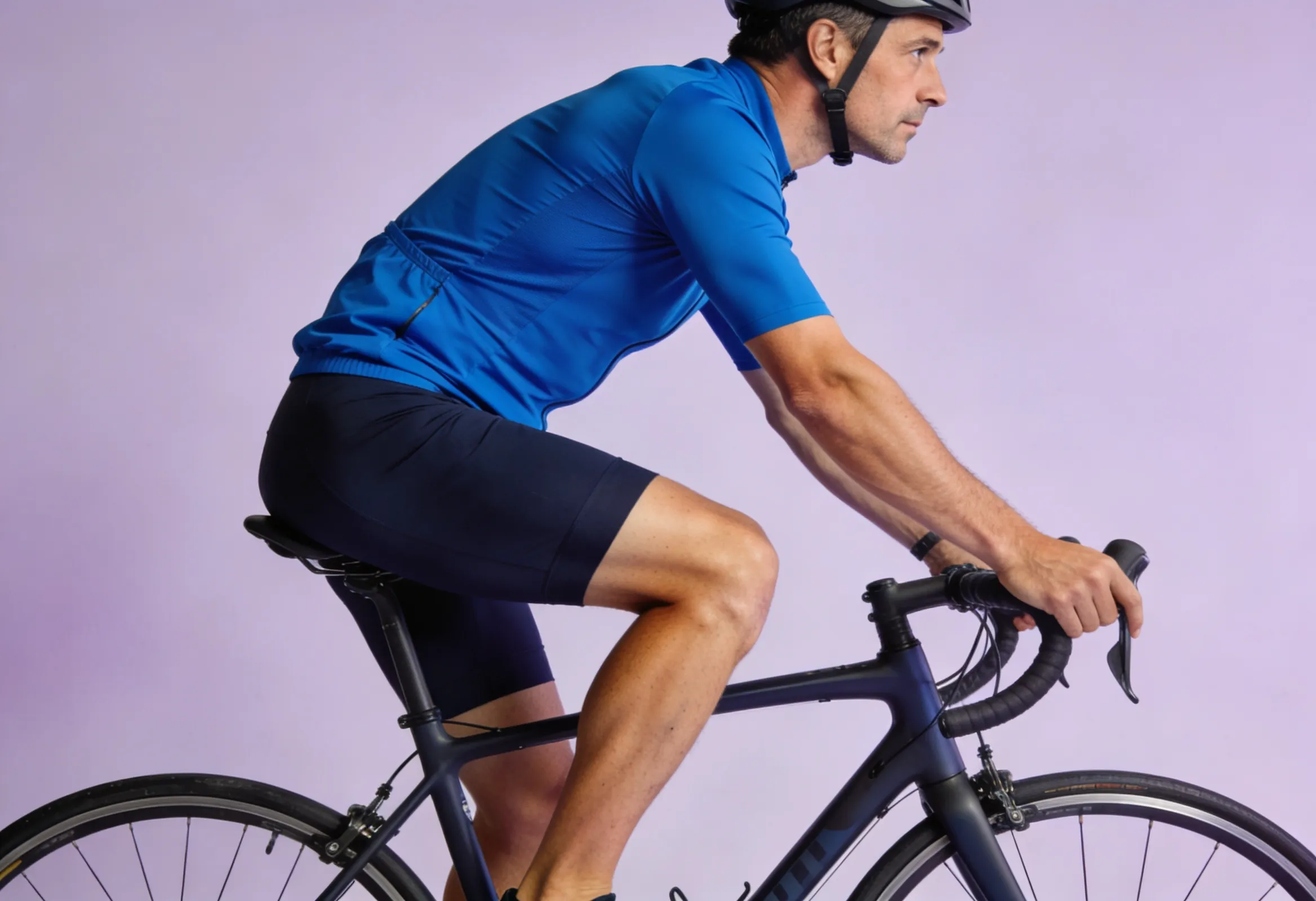
Cycling with knee pain and the load factors worth understanding

Dr Nicola Tik
Knee pain in cyclists is common, and it is often misunderstood. Because cycling is low impact, it can feel as though the knee should not be struggling. But the repetitive nature of pedalling means that even small amounts of load in the wrong place, repeated thousands of times over a ride, can add up. This article looks at what tends to be behind knee pain in cyclists and what is worth adjusting.
The knee moves through a relatively fixed arc with every pedal stroke. That consistency is part of what makes cycling gentle on the joint, but it also means that if something about the position or the load is slightly off, the same small issue repeats continuously throughout the ride.
The structures most commonly involved in cycling-related knee pain are the tendons around the kneecap, the tissue on the outside of the knee, and the cartilage under the kneecap. Each tends to be sensitive to specific load factors, but most respond well to adjustments in position, cadence, and training load.
Saddle height is the single most significant position variable for knee pain in cycling. A saddle that is too low increases the compression through the knee at the top of the pedal stroke, which is a common driver of pain around the front of the knee. A saddle that is too high causes the leg to overextend at the bottom of the stroke, which tends to load the structures at the back and outside of the knee.
Cadence is worth considering alongside position. Pedalling at a lower cadence with a heavier gear increases the force through the knee with each stroke considerably. A higher cadence at lower resistance reduces that force and is generally better tolerated by an irritated knee. If you tend to ride in big gears at a slow pedal rate, experimenting with a lighter gear and quicker turnover during a period of knee pain is a practical adjustment.
Ride volume and how quickly it has increased is also worth reflecting on. Most cycling-related knee problems develop during periods of increased training rather than at a stable load.
Reducing ride duration and avoiding particularly hilly routes during a flare-up gives the knee a chance to settle without losing your riding habit. Climbing places higher demand on the knee than flat riding, so keeping things flatter for a week or two is a sensible temporary adjustment.
How the knee feels in the day after a ride tends to be as informative as how it feels during. If it is noticeably more uncomfortable the following morning, that is a useful signal that the load was a little high.
Strengthening the muscles around the hip and thigh builds the support the knee needs to manage cycling load over the long term. Many cyclists find that consistent strength work makes a bigger difference to knee pain than reducing their riding alone.
If you would like to try a guided exercise for the knee and hip, VIDA has a short video you can follow at your own pace.