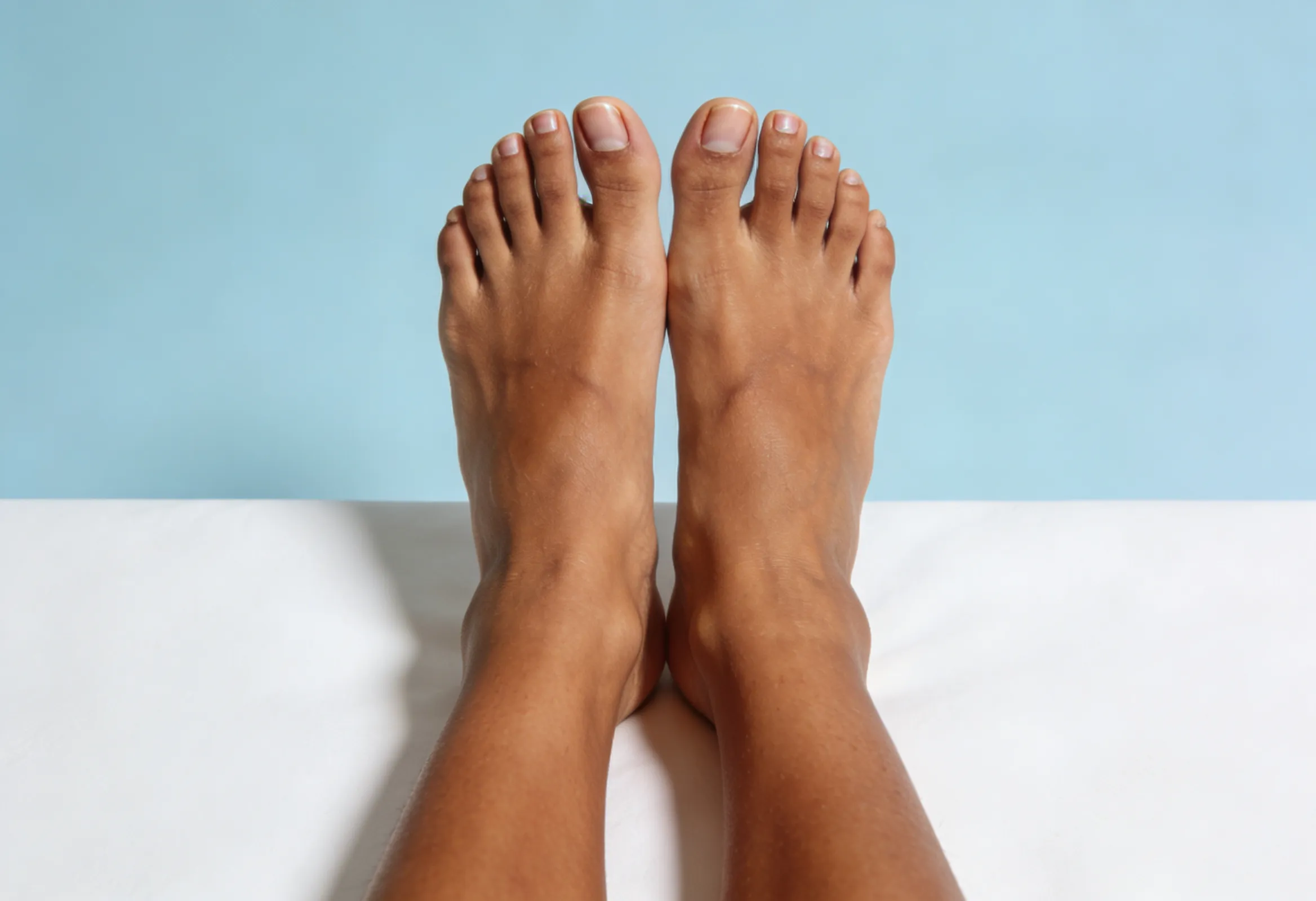
Bunions and the upstream effects on knee, hip and lower back

Dr Nicola Tik
If you have a bunion, you may have been told it is a foot problem and left it at that. What is less often explained is how a bunion can influence the way the whole leg and lower back moves over time. This article covers both.
A bunion develops when the big toe drifts towards the other toes, causing the joint at the base of the big toe to protrude outward. Beyond the localised discomfort this causes, it also affects how the foot pushes off the ground during walking.
The big toe joint plays a central role in the normal walking cycle. When it is stiff or painful, the foot compensates by rolling inward or turning outward to avoid loading the uncomfortable area. This compensation is automatic and largely unconscious, but it changes the mechanics travelling up through the ankle, knee, hip, and lower back with every step.
When the foot compensates around a bunion, the knee often absorbs some of that altered load. A foot that rolls inward during walking creates an inward rotation through the lower leg, which places uneven stress on the inner side of the knee over time. People with bunions sometimes develop knee discomfort that seems unrelated to their foot until the connection is explained.
Footwear plays a significant role here. Shoes that are too narrow compress the forefoot and worsen the bunion's effect on walking mechanics. Wider fitting shoes with a supportive sole reduce the compensation pattern and take some of the altered load off the knee.
The altered walking pattern that develops around a bunion can also show up further up the chain. A foot that turns outward to avoid the bunion loads the hip differently, which can contribute to tightness through the outer hip and gluteal muscles over time. The lower back compensates for asymmetries in the hips, so persistent changes at foot level can eventually contribute to discomfort higher up.
This does not mean that every case of lower back or hip pain in someone with a bunion is caused by the bunion. But it is worth considering the foot as part of the picture, particularly if hip or back symptoms developed gradually alongside worsening foot mechanics.
Footwear is the most impactful practical change for most people. Wide toe box shoes, bunion pads to reduce friction, and supportive insoles that encourage a more neutral foot position all reduce the compensation pattern during walking.
Keeping the ankle and calf mobile supports foot mechanics during the walking cycle. Gentle calf stretches and ankle circles done regularly are simple and worth including in your day.
Strengthening the muscles of the foot and lower leg, particularly those that support the arch, helps maintain as much normal function as possible. Toe spreads, where you sit and spread your toes as wide as comfortable and hold briefly, are a straightforward starting point.
If you would like to try a guided lower leg and foot stretch, VIDA has a short video you can follow at your own pace.