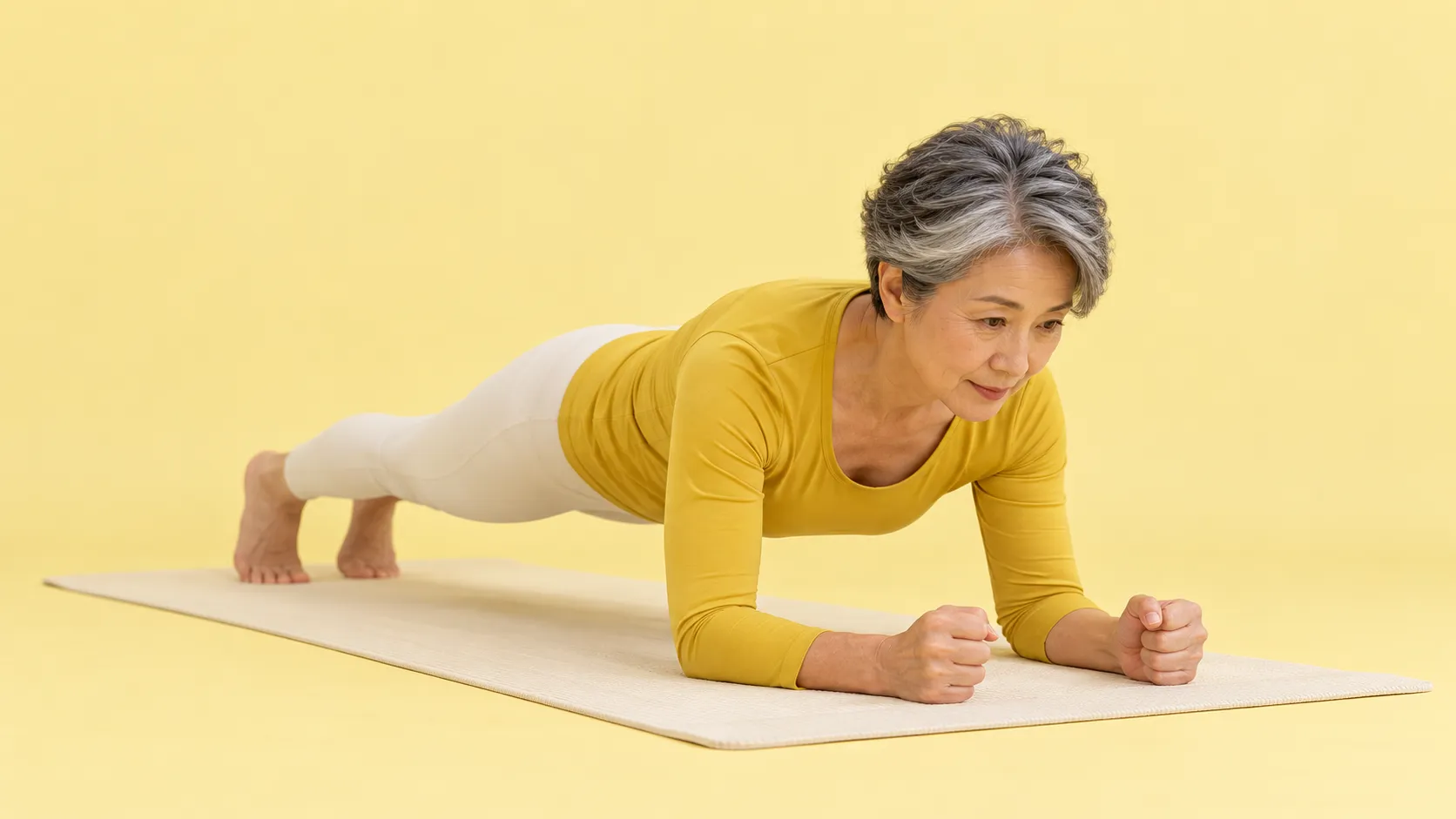
Goal: Hold a steady plank
Building plank strength through menopause

Dr Nicola Tik
Many people find their body feels different through menopause. Muscles may feel weaker or tire sooner, and things that used to feel easy can take more effort. Building strength through this time can help you feel steadier, and the forearm plank is one way to do it.
As oestrogen levels change, many people notice changes in muscle and bone. Muscle mass tends to decrease with age, and this can speed up around menopause. Strength training is widely recommended through midlife to support muscles, bones and everyday function.
The forearm plank builds endurance in your trunk muscles, the muscles around your tummy, back and hips that keep you steady. These muscles help with lifting, carrying, bending and balance.
Planks work your muscles, but they don’t put much load through your bones. Bones tend to respond best to weight-bearing and resistance exercise, like walking, stair climbing and lifting weights. Planks can be one part of a wider strength routine.
You could try:
The forearm plank on your knees is a good option if you’re starting out or having a tired day.
Broken sleep, night sweats and changing energy levels are common during menopause. On lower-energy days, you could try shorter holds or the knee version. Keeping your routine going, even at a lighter level, helps your strength keep building.
Regular practice matters more than long holds. Your daily goal video gives you a steady routine to build on.
Pair your goal video with one other strength activity this week, like a brisk walk with some hills or a few sit-to-stands from a chair.