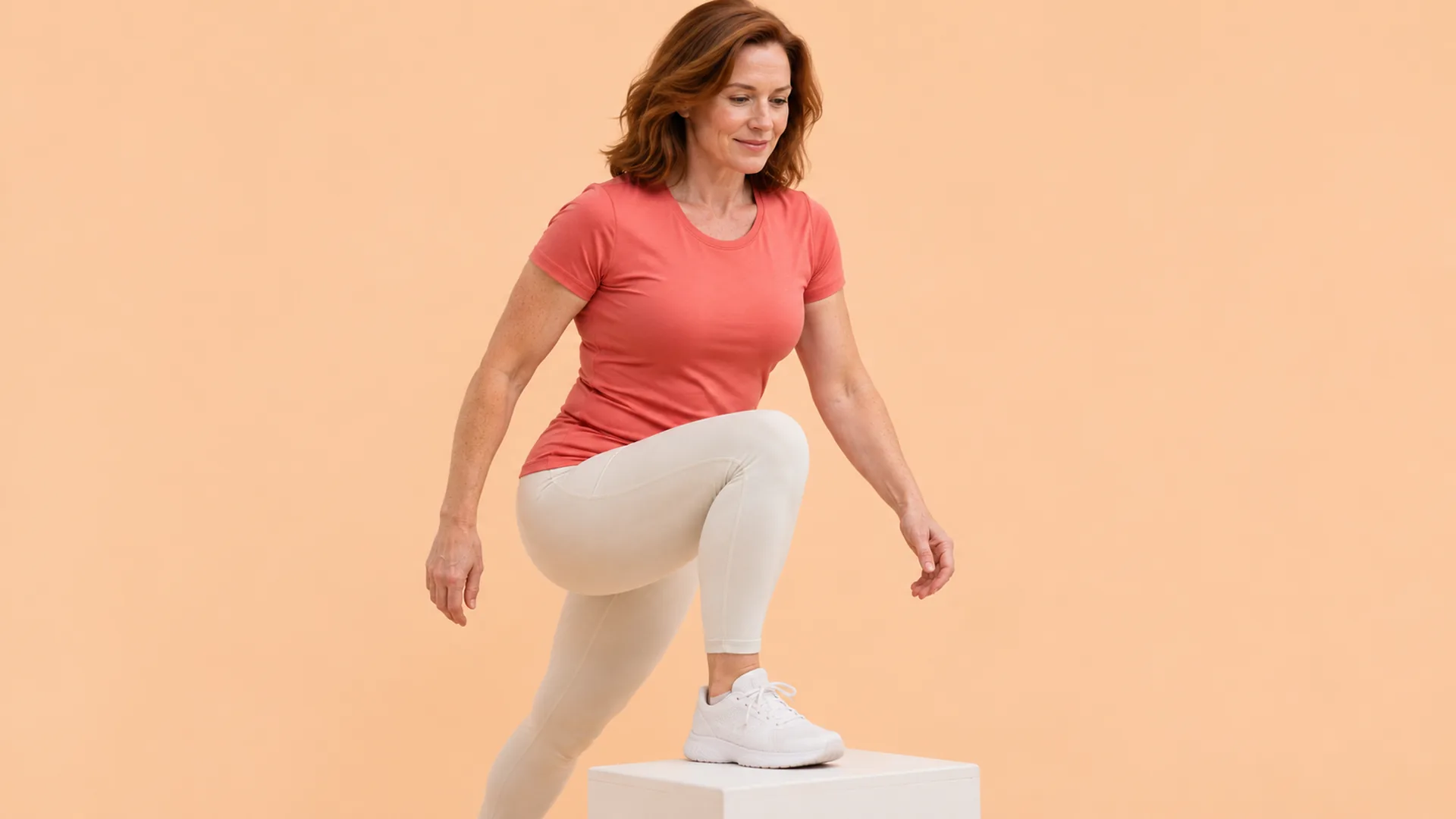
Building knee strength when you have pain

Dr Nicola Tik
If your knee aches now and then but lets you get on, it is a good time to get stronger. Stronger muscles around your knee help it handle stairs, walking and getting up from a chair.
The muscles at the front of your thigh act like shock absorbers for your knee. Your hip muscles help keep it steady as you move. When these are stronger, your knee takes less of the load itself.
Research suggests strengthening the thigh and hip muscles is one of the most effective ways to ease knee pain. It works for many common knee problems, including osteoarthritis and pain around the kneecap.
Choose the level that feels right for you today. You can move up or down whenever you like.
Aim for two or three sessions a week. VIDA has short videos of sit to stands and heel raises if you would like to follow along.
Some discomfort in your knee during these exercises is fine. Aim to keep it mild, and check how your knee feels the next morning. If it is close to its usual self, the level suits you. If it feels noticeably worse or swollen, drop down a level for a week.
Muscle ache in your thighs a day or two after starting is normal. It usually eases as you get used to the work.
Knee joints like regular movement. They often feel stiff after sitting, then loosen as you get going. Getting up every 30 to 45 minutes, and straightening each knee a few times while sitting, can help.
Walking is good for knees too. Research suggests people who walk regularly are less likely to develop new knee pain.
When the standard level has felt easy for a couple of weeks, move up to harder or add a round. Change one thing at a time so you can tell how your knee responds.
Your VIDA pain check-in is a good way to see your knee getting stronger over time.
Pick a sturdy chair at home and try one round of sit to stands at your chosen level.