Entrenador de dolor
The hidden link between bunions and workplace comfort

Dr Nicola Tik
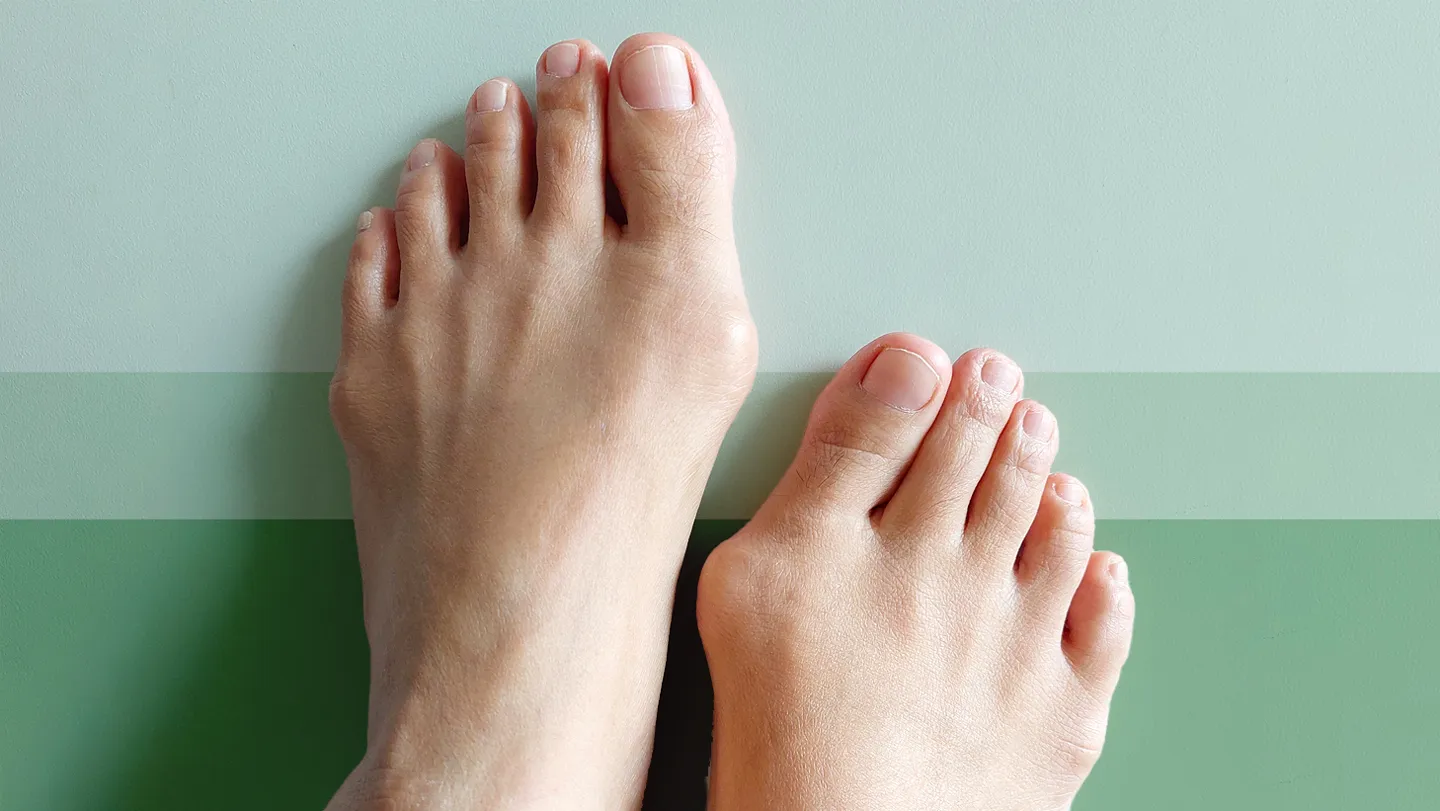
Bunions, also known as hallux valgus, occur when the big toe gradually shifts towards the other toes, creating a bony prominence at the base of the toe. This can lead to pain, swelling, stiffness and pressure at the front of the foot, particularly with prolonged standing or walking.
At work, symptoms are often influenced by footwear choices, time spent on the feet, and how pressure is distributed through the forefoot. Understanding these everyday factors helps reduce irritation and support better day-to-day comfort.
Bunions are sensitive to pressure, restricted toe space, and prolonged load through the forefoot.
Common workplace contributors include:
• Tight or narrow footwear
Shoes that compress the toes increase pressure over the bunion and aggravate pain.
• Prolonged standing or walking
Sustained load through the forefoot increases discomfort and swelling.
• Limited movement variety
Staying in one position for too long can increase stiffness in the foot.
• Uneven weight distribution
Shifting weight away from the painful toe can lead to compensatory strain elsewhere in the foot.
These factors can cause discomfort to build gradually throughout the working day.
Bunion discomfort often responds well to reducing pressure, improving footwear fit, and using gentle, regular movement.
Wear shoes with a wide toe box to reduce pressure on the bunion.
Avoid narrow, pointed or rigid shoes during the workday.
If your role involves standing, alternate between sitting and standing where possible.
Take short seated breaks to reduce continuous forefoot load.
Light movement helps reduce stiffness and improve circulation, such as:
Movements should feel smooth and stay within comfort.
When standing, try to spread weight across the whole foot rather than pushing off the big toe alone.
Avoid leaning excessively to one side.
If sitting for long periods, take shoes off briefly if appropriate to reduce pressure and swelling.
Bunions are a structural change, but symptoms are highly influenced by daily habits. By choosing footwear with adequate space, reducing prolonged forefoot load and using gentle movement, many people can significantly improve comfort at work. Small, consistent adjustments make a meaningful difference.