Entrenador de dolor
The hidden link between Achilles tendinitis and workplace comfort

Dr Nicola Tik
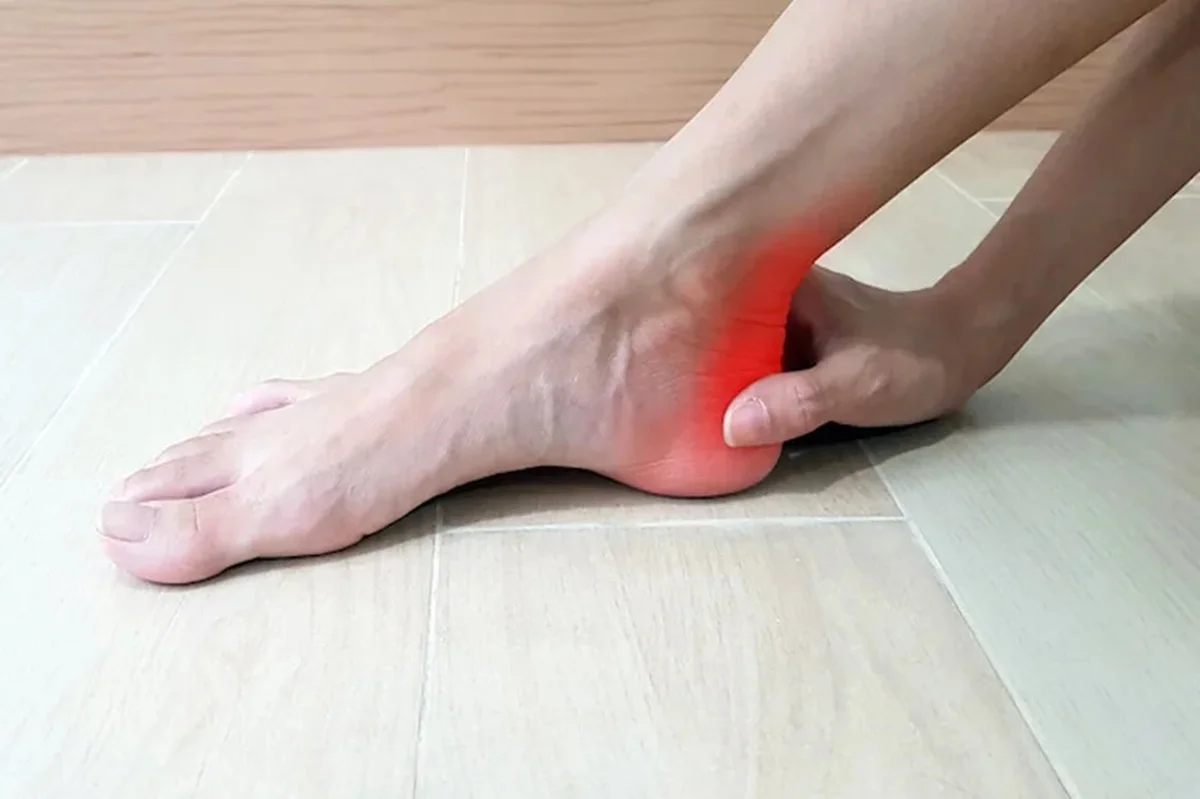
Achilles tendinitis occurs when the Achilles tendon at the back of the ankle becomes irritated through repeated load or sustained strain. It commonly causes stiffness, aching or pain around the heel or lower calf, often worse after periods of rest or prolonged standing.
At work, symptoms are influenced by how long we stand or sit, what footwear we wear, and how often we change position. Understanding these everyday patterns helps reduce irritation and support steadier comfort throughout the day.
The Achilles tendon is sensitive to repeated loading, prolonged tension, and sudden changes in activity.
Common workplace contributors include:
• Prolonged standing
Long periods on the feet increase load through the tendon and can worsen pain.
• Sudden walking after prolonged sitting
The tendon often feels stiff after rest, making the first steps uncomfortable.
• Unsupportive footwear
Flat or poorly cushioned shoes increase strain through the Achilles.
• Limited movement variety
Staying in one position for too long increases stiffness and reduces tendon tolerance.
These factors can cause symptoms to fluctuate and build through the working day.
Achilles tendinitis often responds well to load management, supportive footwear, and gentle, regular movement.
Break up long periods of sitting or standing with brief posture changes every 20–30 minutes.
This helps reduce stiffness and improves tendon tolerance.
Wear shoes with good heel cushioning and support during the workday.
Avoid long periods in very flat or unsupportive footwear.
Light movement helps maintain circulation without overloading the tendon, such as:
Movements should feel smooth and stay within comfort.
If your role involves standing, alternate weight between feet and take short seated breaks where possible.
Avoid locking the knees or staying in one stance.
Gradually build walking or standing time rather than making abrupt changes.
Use lifts instead of stairs if symptoms are flaring.
Achilles tendinitis is often influenced by how load is applied over time rather than one single activity. By breaking up prolonged positions, wearing supportive footwear and using gentle, regular movement, many people can significantly improve comfort during the working day. Small, consistent adjustments make a meaningful difference.