Stability and load awareness with spondylolisthesis

Dr Nicola Tik
You already know what spondylolisthesis is and how it differs from other back conditions. This article focuses on the practical side, specifically how to manage load through the spine and build stability in a way that works with your condition rather than against it.
Because spondylolisthesis involves a degree of instability at a specific spinal segment, building the strength and control of the muscles that support that area is particularly valuable. The deep muscles of the trunk, which wrap around the spine and pelvis, play a key role in controlling movement at the affected segment and reducing the load that falls directly on it during daily activity.
This is not about bracing rigidly or avoiding movement. It is about developing a level of muscular support that allows you to move more freely and comfortably through the day with less strain on the affected area.
As covered in the previous article, a neutral or slightly flexed spine position tends to be more comfortable than extension for most people with spondylolisthesis. Carrying this awareness into daily activities makes a practical difference.
When standing for periods, a slight forward lean with support, resting your hands on a surface in front of you, can offload the affected segment considerably. When walking, keeping an easy upright posture without exaggerating the lower back curve tends to work well. When sitting, a supported position with the lower back gently in contact with the chair back is generally more comfortable than perching forward unsupported.
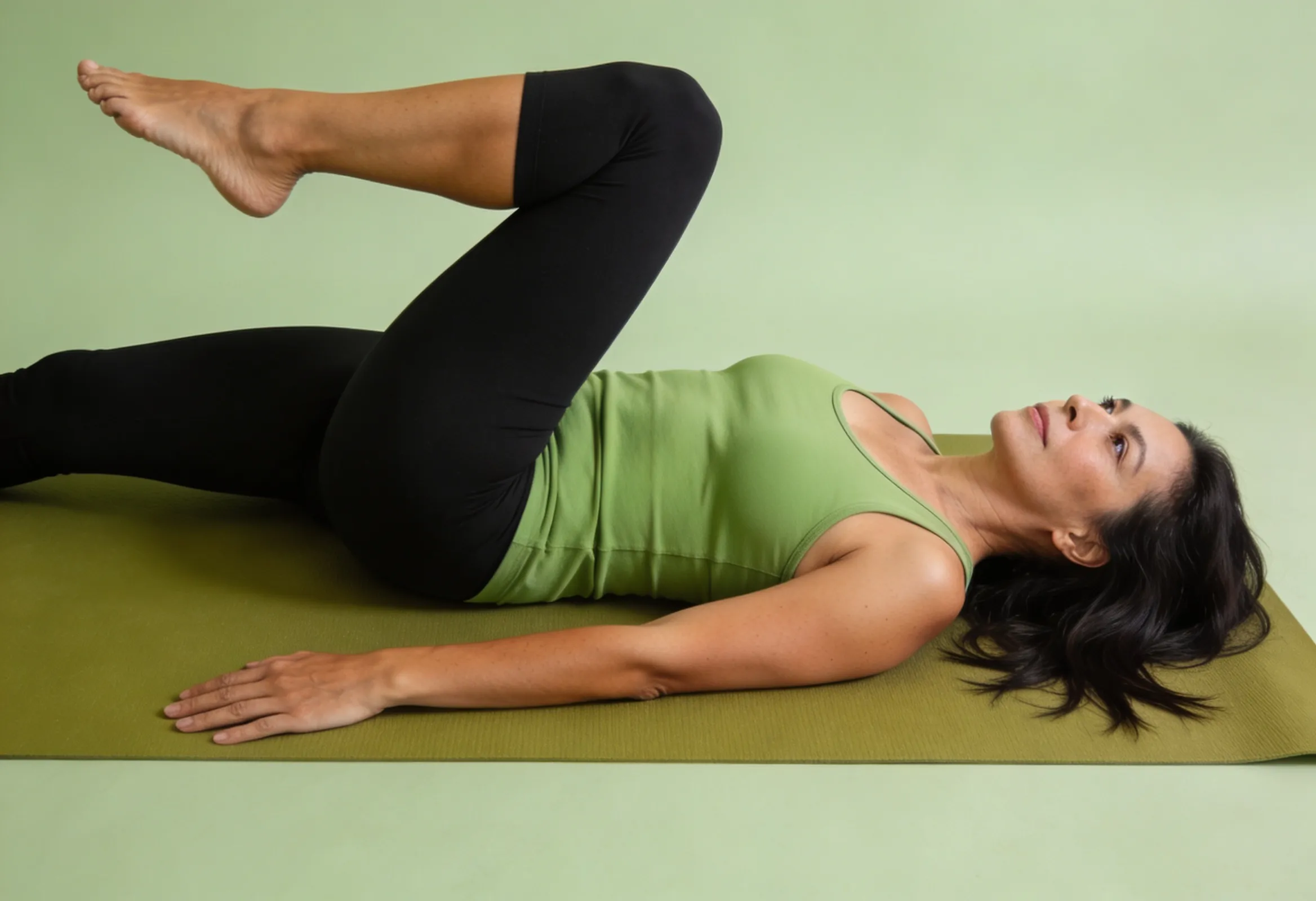
Starting with low load exercises that encourage deep trunk muscle activation is a sensible approach. Exercises done lying on your back tend to place less demand on the affected segment than standing or loaded exercises. Gentle knee folds, where you lie on your back with knees bent and slowly lift one foot a small distance off the floor while keeping the lower back steady, encourage trunk activation with minimal spinal load.
Dead bugs, where you lie on your back with arms pointing to the ceiling and knees bent, and slowly lower one arm and the opposite leg towards the floor while keeping the lower back still, are another option many people with spondylolisthesis find manageable.
Progress gradually and pay attention to how your back responds after exercise as well as during it. Some mild muscle fatigue is normal. Pain that lingers into the next day is a signal to ease back.
Lifting carefully is worth particular attention with spondylolisthesis. Keeping objects close to your body, bending your knees, and avoiding combined bending and twisting movements all reduce the shear force through the affected spinal segment.
Prolonged standing on hard surfaces tends to accumulate load through the lower back over time. If your day involves a lot of standing, anti-fatigue matting, comfortable footwear, and regular position changes all help.
Your VIDA pain check-in is a useful way to track how your back responds to different activities and identify which adjustments are making a difference over time.